
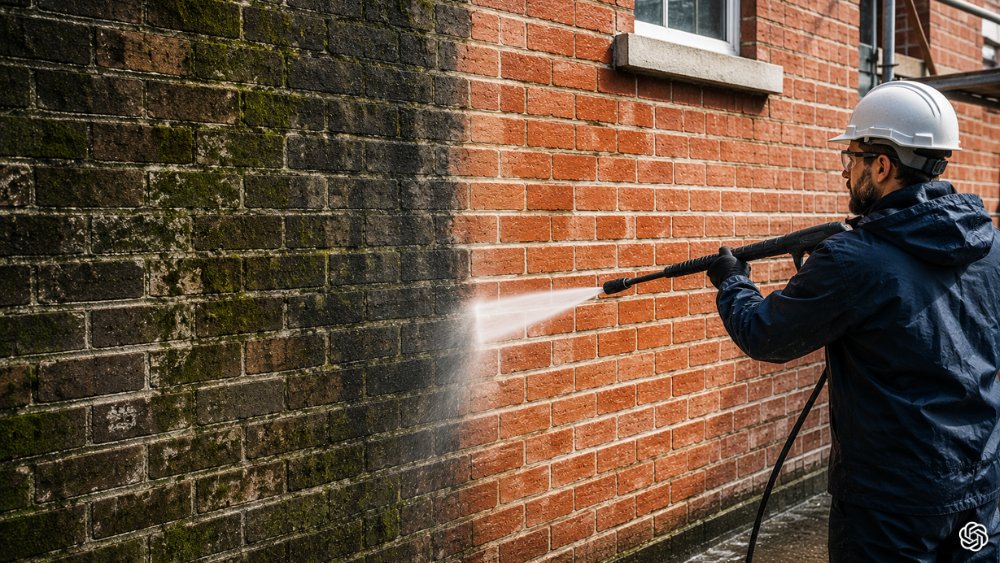
Brick Cleaning Solutions for Moss, Algae, Carbon Stains, and Efflorescence
Brickwork gives a property character, strength, and lasting appeal. Whether it is a traditional home, a period building, a commercial property, or a modern development, clean brickwork helps create a positive first impression. Over time, however, external walls are exposed to weather, pollution, moisture, and biological growth. These factors can lead to unsightly staining that affects both appearance and the long-term condition of the brick surface.
Many property owners notice green patches, black marks, white deposits, or dark discolouration appearing on their brickwork and wonder what is causing the problem. Moss, algae, carbon stains, and efflorescence are among the most common issues affecting brick surfaces across the UK. While these stains may appear similar at first glance, each has a different cause and often requires a different cleaning approach.
Understanding the source of brick staining is the first step towards achieving effective and lasting results. Proper brick cleaning not only improves appearance but can also help identify underlying moisture issues, surface deterioration, and maintenance concerns before they become larger problems. This guide explores the causes of moss, algae, carbon stains, and efflorescence while examining the most suitable brick cleaning solutions for each condition.
Understanding Common Brick Stains and Why They Appear
Brickwork is constantly exposed to changing environmental conditions. Rain, frost, airborne pollutants, organic matter, and moisture can all contribute to surface staining. While some stains develop gradually over several years, others can become visible within a relatively short period.
Moss often develops in shaded areas where moisture remains on the surface for extended periods. Properties surrounded by trees or located in areas with limited sunlight are particularly vulnerable. Moss can retain moisture against the brick surface, creating conditions that encourage further biological growth and potential surface damage during colder months.
Algae is another common issue found on external brickwork. It usually appears as green staining across damp areas of walls, especially on north-facing elevations. Unlike moss, algae can spread quickly when moisture and shade combine. Although it may seem like a cosmetic problem, algae growth often indicates ongoing moisture exposure that should be investigated.
Carbon staining presents a different challenge. These dark or black marks are commonly associated with pollution, vehicle emissions, industrial activity, smoke, and urban environmental conditions. Properties located near busy roads or city centres frequently experience carbon deposits accumulating on external walls. Over time, these stains can become deeply embedded within the brick surface, making removal more difficult.
Efflorescence is one of the most misunderstood forms of brick staining. It appears as a white, powdery substance on brickwork and is caused by water carrying natural salts through the masonry. As the moisture evaporates, salt deposits remain on the surface. While efflorescence is often harmless in its early stages, persistent occurrences may indicate ongoing moisture movement within the structure.
Each of these staining issues requires a clear understanding of the cause before any cleaning process begins. Effective brick cleaning is not simply about removing visible marks. It also involves addressing the conditions that allow those stains to develop in the first place.
Brick Cleaning Methods for Moss and Algae Removal
Moss and algae are among the most common problems affecting external brickwork across the UK. These organic growths thrive in damp, shaded conditions and can quickly spread across walls, garden boundaries, and older buildings. While they may initially seem like a minor cosmetic issue, prolonged growth can trap moisture against the brick surface, contribute to staining, and make masonry appear neglected. Effective brick cleaning involves removing existing growth while addressing the conditions that encourage it to return.
Identifying the Cause of Moss and Algae Growth
Before any brick cleaning begins, it is important to understand why moss and algae have developed. Areas that receive little sunlight, have poor air circulation, or remain damp for long periods are particularly vulnerable. North-facing walls, properties surrounded by trees, and brickwork located near overflowing gutters often experience higher levels of biological growth. Identifying these contributing factors helps ensure that cleaning results last longer.
Removing Surface Moss from Brickwork
The first stage of moss removal usually involves carefully clearing visible growth from the brick surface. Moss can form thick layers that hold moisture against the masonry, increasing the risk of staining and surface deterioration. Removing loose growth allows the underlying brickwork to be properly assessed and prepared for further treatment. This stage is particularly important when carrying out professional brick cleaning on older properties where excessive moisture may already be affecting the masonry.
Treating Algae Stains Effectively
Algae often appear as green discolouration across brick walls and external surfaces. Unlike moss, algae can spread rapidly and cover large areas within a short period. Successful algae removal requires more than simply washing the surface. Specialist brick cleaning treatments are often used to break down organic deposits and eliminate remaining spores hidden within the pores of the brickwork. This helps reduce the likelihood of staining returning soon after cleaning.
Choosing the Right Brick Cleaning Method
Not all brick surfaces respond in the same way to cleaning treatments. The age, condition, and type of masonry must always be considered before selecting a cleaning approach. Older and heritage properties often contain softer bricks that require gentler cleaning techniques. Using excessive pressure or unsuitable products can damage the brick face, weaken mortar joints, and affect the appearance of the building. A suitable brick cleaning method protects the masonry while achieving effective stain removal.
Preventing Future Moss and Algae Growth
Long-term results depend on controlling the conditions that allow moss and algae to develop. Improving drainage around the property, trimming nearby vegetation, increasing sunlight exposure, and ensuring gutters function correctly can significantly reduce future growth. Effective moisture management is one of the most important aspects of brickwork maintenance and helps keep external walls cleaner for longer.
The Importance of Ongoing Brickwork Maintenance
Regular inspections help identify early signs of moss and algae before they become widespread. Small patches can often be addressed quickly, preventing larger cleaning projects in the future. Routine brickwork maintenance supports the appearance of the property and helps preserve the condition of the masonry over time. By taking a proactive approach, property owners can reduce staining, limit moisture-related issues, and maintain cleaner brick surfaces throughout the year.
Removing Carbon Stains from Brickwork Safely and Effectively
Carbon staining presents unique challenges because the deposits often penetrate deeply into the brick surface. Unlike moss or algae, which sit on top of the masonry, carbon particles can become embedded within microscopic pores and surface textures.
Urban environments frequently expose buildings to airborne contaminants from traffic, industrial activity, and general pollution. Over time, these particles accumulate and create dark discolouration that can significantly alter the appearance of brickwork. Chimneys, fireplaces, and older industrial buildings may also experience concentrated carbon staining due to prolonged exposure to smoke and soot.
The success of brick cleaning for carbon stains depends largely on selecting the correct cleaning method. Surface washing alone may not achieve satisfactory results when deposits have built up over many years. In some cases, specialist cleaning treatments are needed to break down and lift carbon particles without damaging the masonry beneath.
The type of brick also influences the cleaning process. Dense modern bricks often respond differently to treatment compared to traditional handmade bricks. Surface texture, age, porosity, and previous repairs can all affect cleaning outcomes.
Before undertaking large-scale cleaning work, experienced professionals often assess a small test area to determine the most suitable approach. This helps identify potential risks and ensures that cleaning methods are compatible with the masonry.
Property owners should also be aware that aggressive cleaning techniques can sometimes create more problems than they solve. Excessive force may remove surface staining but can also damage the protective outer layer of the brick. Once this occurs, bricks may become more vulnerable to future moisture penetration and environmental deterioration.
A carefully planned brick cleaning process allows carbon stains to be reduced while preserving the appearance and condition of the masonry. The objective is always to achieve improvement without compromising the long-term health of the building fabric.
Managing Efflorescence and Preventing Its Return
Efflorescence is often alarming for property owners because the white deposits can appear suddenly and spread across large areas of brickwork. Fortunately, in many situations, efflorescence is more of an aesthetic issue than a structural concern.
The formation of efflorescence requires three key elements. Water must be present within the masonry, soluble salts must exist within the materials, and there must be a route for moisture to reach the surface. When these conditions combine, salt deposits become visible as moisture evaporates.
Newly constructed buildings commonly experience temporary efflorescence as construction moisture gradually leaves the masonry. In many cases, these deposits reduce naturally over time as the building dries. However, persistent or recurring efflorescence may indicate ongoing moisture movement that requires further investigation.
Effective brick cleaning begins with identifying the source of water entering the masonry. Damaged gutters, leaking downpipes, poor drainage, defective pointing, and other moisture-related issues can all contribute to recurring salt deposits.
Cleaning efflorescence generally involves removing surface salts while avoiding methods that drive moisture deeper into the wall. Incorrect cleaning practices can sometimes worsen the problem by introducing additional water into the masonry.
Long-term prevention focuses on moisture control. Addressing water ingress issues helps reduce the movement of salts through the brickwork and limits future deposits. In many cases, repairing the source of moisture is more important than the cleaning process itself.
Property owners should understand that some degree of efflorescence may return temporarily while moisture continues to leave the structure. Patience and proper maintenance often lead to gradual improvement over time.
Why Professional Assessment Matters Before Brick Cleaning
Brick cleaning is often viewed as a straightforward maintenance task. However, the condition of masonry can vary significantly from one property to another. Factors such as age, construction methods, environmental exposure, previous repairs, and moisture conditions all influence the most suitable cleaning approach.
What works effectively for one building may not be appropriate for another. A cleaning method that produces excellent results on modern brickwork could cause damage to older masonry. This is particularly important when dealing with listed buildings, heritage properties, or structures containing traditional materials.
Professional assessment helps determine the nature of the staining, identify any underlying defects, and recommend suitable cleaning solutions. This process reduces the risk of accidental damage and improves the likelihood of achieving consistent results.
In addition to improving appearance, brick cleaning can provide valuable insights into the condition of the masonry. Staining patterns often reveal hidden moisture issues, defective pointing, blocked drainage systems, or areas of surface deterioration. Identifying these concerns early can help property owners plan maintenance more effectively.
Many building conservation specialists and property maintenance experts recommend periodic inspections of external brickwork, particularly in areas exposed to heavy weather, pollution, or biological growth. Regular monitoring allows problems to be addressed before extensive cleaning or repairs become necessary.
Conclusion
Brickwork naturally faces years of exposure to weather, moisture, pollution, and environmental contaminants. Moss, algae, carbon stains, and efflorescence are among the most common causes of discolouration, yet each requires a different approach to achieve successful cleaning results. Understanding the cause of the staining is just as important as the cleaning process itself.
Effective brick cleaning focuses on preserving the condition of the masonry while restoring appearance. Removing moss and algae involves controlling biological growth and moisture. Carbon stain removal requires careful treatment to lift embedded deposits without damaging the brick surface. Managing efflorescence depends on addressing moisture movement and reducing the conditions that allow salt deposits to form.
By combining appropriate cleaning methods with ongoing maintenance and moisture management, property owners can protect the appearance and longevity of their brickwork for years to come. Clean, well-maintained masonry not only enhances visual appeal but also contributes to the overall health and durability of the building.
At Dynamic Restoration, we provide professional Brick Cleaning services designed to remove moss, algae, carbon staining, efflorescence, and other surface contaminants while helping preserve the character and condition of your brickwork. We use suitable cleaning methods for different masonry types, ensuring a cleaner appearance and a carefully restored finish that enhances the overall look of your property.
With extensive experience in Brick Cleaning, we help bring tired and weathered brick surfaces back to life by tackling stubborn stains and organic growth that can affect both appearance and long-term maintenance. Our approach focuses on achieving outstanding results while respecting the age, structure, and unique features of every building.