
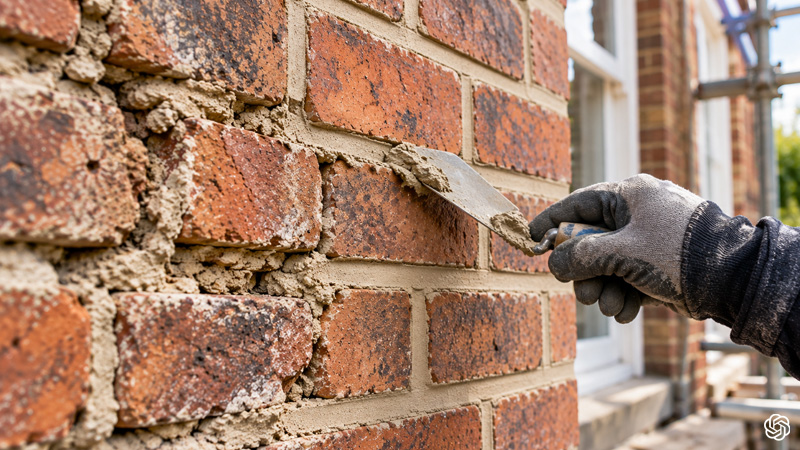
What Are the Most Common Repointing Mistakes to Avoid?
Repointing can look simple. Remove old mortar, add new mortar and smooth the joints. In practice, good repointing needs much more care. A mistake with the mortar, joint depth or preparation can damage brickwork instead of protecting it.
Mortar joints help keep rain out, allow a wall to deal with small movement and protect the edges of bricks. When mortar cracks, crumbles or falls away, repointing can restore that protection. When the work is done badly, the new joints may fail early or damage the surrounding bricks.
So, what are the most common repointing mistakes to avoid? The biggest problems usually involve poor preparation, unsuitable mortar, rushed application and failing to understand the condition of the wall. Knowing what can go wrong helps you decide whether a small repair is suitable for DIY work or needs professional attention.
Choosing the Wrong Mortar for the Brickwork
One of the biggest mistakes is treating all mortar as the same. The correct mix depends on the age, type and condition of the wall. Older properties, including many Victorian homes, may use softer lime mortar. Replacing it with a very hard cement-rich mix can cause problems because the new material may not behave like the original wall.
A mortar that is too hard can put extra stress on softer bricks, contributing to cracking, spalling and damaged brick faces. A weak or poorly prepared mix may also fail to bond properly.
Matching mortar is about more than colour. Strength, texture and moisture behaviour all matter. The existing joints should be checked before a new mix is chosen, and a small test area can help confirm the proposed finish.
The aim should be to use a compatible mortar that works with the existing brickwork. This is particularly important on older London properties, where traditional bricks and mortar may need a different approach from modern construction.
Removing Mortar Too Aggressively
Poor preparation is another common repointing mistake. Damaged mortar needs to be removed to a suitable depth so the new material has a sound base. If too little is removed, new mortar may only sit on the surface. If too much is removed, bricks can be chipped and unnecessary damage can be caused.
Power tools can remove mortar quickly, but they can be difficult to control on soft or older brickwork. A careless pass may damage brick edges or widen joints. Loose dust and debris should also be cleared so the fresh mortar has a clean surface to bond with.
Much of the final quality is decided before fresh mortar is applied. Careful preparation helps the new pointing become part of the wall rather than simply covering an old problem.
Rushing the Repointing and Finishing Process
Even with the correct mortar, repointing can fail if the application is rushed. Joints need to be filled properly and compacted so hidden voids are not left behind. Gaps inside the joint can create weak points where moisture can enter.
The finish should also suit the existing brickwork. Common profiles include flush, weather-struck, recessed and struck finishes. The right choice depends on the property and original work.
Weather conditions matter as well. Very hot, dry or windy weather can make fresh mortar lose moisture too quickly, while heavy rain or frost can affect curing. Newly pointed areas may need protection.
Finishing at the wrong stage can also affect the joint surface and leave mortar smeared across the bricks. Good repointing requires patience rather than a rushed finish.
Ignoring Other Brickwork Problems
Repointing is not always the answer to every masonry problem. A wall may also have cracked bricks, loose bricks, movement, damaged lintels or moisture problems. Covering these issues with fresh mortar can improve the appearance for a short time without fixing the cause.
Before work begins, the whole area should be considered. Are the bricks sound? Are cracks running through the masonry? Is there evidence of damp? Are chimney joints badly exposed to weather? Are large sections of mortar missing?
These questions help establish whether the work is simple repointing or part of a wider brick repair project. Dynamic Restoration Ltd states that it assesses areas before work begins and uses suitable protection where needed.
Repointing should follow an understanding of why the mortar has failed.
Getting the Colour, Texture or Joint Profile Wrong
A wall can be structurally sound and still look poorly repointed. A visible mismatch between old and new mortar is one common reason. New mortar that is much brighter, darker, smoother or wider than the original can make repairs stand out.
Colour should not be judged from a dry sample alone. Mortar can change as it cures, while texture affects how light falls across the joints. A small test panel allows the proposed mix and finish to be viewed against the existing wall before a larger area is completed. Dynamic Restoration says it offers a free test panel to help assess the suitable technique and expected finish before work starts.
Joint shape matters too. Weather-struck pointing, for example, is formed to help water run away from the wall. Other profiles create different visual results. The mistake is not choosing one particular style. It is failing to consider the existing masonry, weather exposure and character of the property.
Taking On Large or Older Jobs Without Enough Experience
Small, accessible repairs can sometimes be suitable for a confident DIY homeowner. Repointing a whole elevation, chimney or tall period property is different. Working at height creates safety risks, while older masonry may need careful material selection and gentler removal methods.
Keeping the depth, mortar mix, profile and finish consistent across a large wall takes time and skill. Different batches or techniques can leave obvious changes in colour and texture.
Older buildings deserve particular care because the wrong repair method can affect how the wall handles moisture. Heritage brickwork may need lime mortar or another compatible material instead of a cement-heavy mix. Dynamic Restoration’s repointing guidance highlights the need for extra care with older homes, chimneys and larger areas, including matching mortar strength, colour and texture to existing masonry.
If you are unsure, an assessment before starting can prevent a small repair from becoming a larger one.
How to Avoid Repointing Mistakes
The safest approach is to slow down before the first joint is removed. Start by checking the condition of the bricks and mortar and identify why the existing joints have failed. Consider the property’s age, brick type, wall exposure and any previous repairs.
Next, choose a compatible mortar and test it on a small area where appropriate. Remove failed mortar without unnecessarily damaging the bricks. Clean the joints, fill them properly and finish them to suit the building. Weather conditions should also be considered during curing.
After repointing, newly worked areas should be protected from harsh weather while the mortar cures. Dynamic Restoration advises light misting of newly pointed joints where suitable and regular checks after bad weather.
If you cannot tell whether your wall needs full repointing or local repairs, an inspection can help. This is especially useful for chimneys, tall elevations, older properties and walls with widespread mortar failure. A careful assessment can identify the actual problem before work begins, which is often the simplest way to avoid costly mistakes.
Frequently Asked Questions
What is the biggest mistake when repointing brickwork?
Using a mortar that is unsuitable for the existing brickwork is one of the most serious mistakes. The new mortar needs to work with the wall rather than simply being harder or stronger. Incorrect mortar can contribute to cracking, moisture problems and brick damage.
Can repointing damage bricks?
Yes. Bricks can be damaged when old mortar is removed too aggressively, unsuitable tools are used or a hard mortar is applied to softer bricks. Careful preparation and material selection are especially important on older buildings.
Should I use cement mortar on an old brick house?
Not automatically. Many older properties used lime-based or other softer mortars. A cement-rich mix can be too hard for some traditional brickwork, so the existing mortar and bricks should be assessed before choosing a replacement.
Can I repoint brickwork in winter?
Cold and wet conditions can make repointing difficult because fresh mortar needs suitable conditions to cure. Frost, heavy rain and very low temperatures can affect new joints, so work should be planned around the weather.
Is repointing suitable for a chimney?
It can be, but chimneys need particular care because they face wind and rain and usually involve working at height. Damaged chimney joints can also allow water into the building. An inspection can establish whether repointing is suitable.