
What Are the Signs You Need Render Removal?
Render can protect a building and give an exterior a finished look, but it does not last forever. As it ages, cracks, loose areas, staining and damp can develop. Render can also hide problems in the brickwork underneath.
Knowing the signs you need render removal can help you act before a small surface problem becomes a larger restoration job. This matters on older London properties, where the masonry beneath render or pebbledash may need careful treatment. Render removal is not simply about changing appearance. It can help inspect the wall, investigate trapped moisture and prepare the surface for cleaning, repointing or a new finish.
What Are the Main Signs You Need Render Removal?
One clear sign is widespread cracking. A few small surface cracks do not always mean the whole coating must come off, but repeated cracks, open joints and areas that keep failing deserve closer attention. Water can enter through cracks and remain between the coating and wall. If cracks keep returning after patch repairs, it is worth finding out what is happening behind the render instead of covering the same area again.
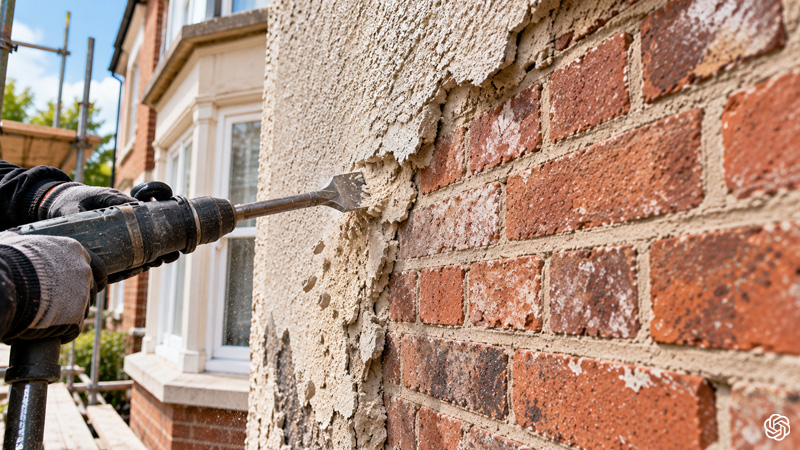
Loose, hollow or crumbling render is another warning sign. If parts of the surface sound hollow, move under light pressure or visibly separate from the wall, the bond may have failed. Loose render can let more water behind the coating and may eventually fall away. The cause can extend beyond the visible section. An inspection can help establish whether local repair is suitable or whether removing the coating would give a better view.
Damp marks inside the property can also be a reason to investigate the outside. Peeling paint, musty smells, mould or damp patches can have many causes, so render should not automatically be blamed. However, cracked or poorly performing external coatings can allow water to reach areas where it should not. If internal damp appears on a wall covered by old render, checking the external surface is sensible before choosing another internal treatment.
Persistent staining is another clue. Dark patches, algae, moss, discolouration and areas that stay wet longer than the surrounding wall can point to moisture problems. Staining alone does not prove removal is needed, but it warrants investigation.
Render can also become a concern when it is hiding damaged brickwork. A wall may look sound from the pavement while the condition of the bricks, mortar joints or earlier repairs underneath is unknown. This matters on older properties because soft or damaged bricks need a careful approach. Removing a coating can reveal the masonry and help determine whether brick cleaning, repair or repointing should follow.
Another sign is repeated patching that never looks or performs right. Older pebbledash and textured render can be difficult to match because colour, texture and weathering change over time. If several sections have failed, repeated repairs may no longer be the most useful option. A wider assessment can show whether removing the existing coating would make more sense.
Why Does Render Removal Matter for Older Brickwork?
Render removal can reveal parts of a building that have been hidden for years. Once removed, the brickwork and mortar can be assessed directly. In some cases, the bricks may be suitable for cleaning and repointing. In others, repairs or a new finish may be more appropriate.
Moisture is a common reason homeowners investigate old render. A crack does not automatically mean a wall has a serious damp problem, and removing render does not guarantee damp will disappear. However, damaged coatings can create routes for water to enter and make it harder to understand where moisture is coming from. Other causes can include defective gutters, leaking pipes, roof defects or failed pointing.
The condition of the brickwork also matters. Brick is not just a decorative surface. Its face and joints play a part in how an older wall deals with weather. Aggressive removal can damage a soft brick face, so the aim should not be to get the coating off as quickly as possible. The method needs to suit the masonry.
A small test area is useful before larger work begins. Dynamic Restoration Ltd says it assesses the area before starting and uses a free test panel to help determine an appropriate technique. Its render removal service also describes checking the wall, testing a small patch, removing the coating carefully and then cleaning or preparing the brickwork for the next stage. This is useful when the condition beneath an old coating cannot be judged from outside.
Is Render Removal Always the Right Answer?
No. Not every crack or stain means a full coating needs to be removed. If the render is sound, firmly bonded and not linked to a moisture or masonry problem, repair or re-rendering may be more suitable. The important point is to understand the condition before choosing the solution.
Re-rendering over an existing surface can sometimes work when the old coating is stable and there are no significant damp or loose areas. However, adding another layer over a failing surface can hide the problem rather than solve it. If the coating is breaking away or trapping moisture, a new finish may only delay the point at which the underlying issue must be addressed.
DIY render removal also needs care. Pebbledash and hard render can be difficult to remove without affecting the brick beneath. Heavy tools, dust, falling material and working at height add risks. Older masonry can be especially vulnerable to chips and surface damage. A professional assessment is useful when you are unsure what type of wall you have or how firmly the coating is attached.
What Happens After Render Is Removed?
Removal is only part of the job. Once the render is gone, the exposed brickwork needs to be assessed. Old mortar may need to be raked out and repointed. Cement residue or other soiling may need cleaning. Damaged bricks may need repair. In some cases, the wall may be prepared for a different render or finish instead of being left exposed.
The condition of the masonry, age of the building, type of brick and previous repairs can all affect the next step. A careful process helps avoid treating every property in exactly the same way.
Dynamic Restoration’s project examples include pebbledash removal followed by intensive cleaning, raking out and repointing, as well as render removal and cleaning on London properties. The company describes itself as an independent exterior restoration business based in London, with services covering brick cleaning, paint removal, stone cleaning, render removal and repointing.
Frequently Asked Questions
Can cracked render be repaired instead of removed?
Sometimes. Small, isolated cracks may be suitable for repair if the surrounding render is sound and there is no sign of movement, damp or widespread failure. If cracks appear across several areas or repairs keep failing, an inspection can help decide whether removal is more suitable.
Does render removal help with damp?
It can help identify and address a damaged external coating, but it is not a universal damp solution. Damp can come from several sources, including gutters, roofs, plumbing, pointing and ground levels. The cause should be established before assuming render is responsible.
Is pebbledash the same as render?
Pebbledash is a textured finish made by applying small stones or pebbles to a render coat while it is wet. It became common on many UK homes. Because it creates a rough outer layer, it can make the masonry underneath harder to see.
How long does render removal take?
There is no single answer because time depends on the area, coating, brickwork and access. Small areas can be much quicker than a full house, while difficult access or fragile masonry can slow the work.
When should I get professional advice about render removal?
If render is loose, widely cracked, repeatedly failing, linked with signs of damp or hiding suspected masonry damage, it is sensible to get the wall assessed. Early advice can help you understand whether repair, removal, cleaning, repointing or another finish is the right next step.