
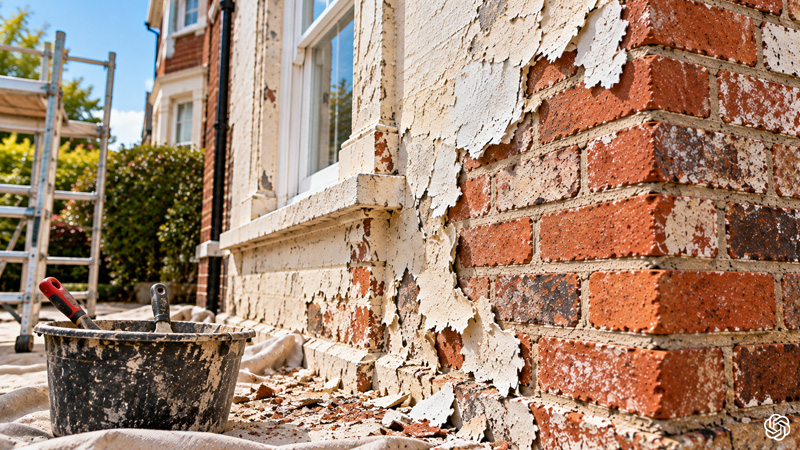
How to Remove Old Paint from Brickwork Safely
Old paint can hide the character of brickwork, but removing it is not as simple as scraping a wall and washing it down. Brick is porous, and older masonry can be softer and more fragile than it first appears. Too much force, the wrong chemical or excessive heat can damage the brick face and mortar joints.
If you are wondering how to remove old paint from brickwork safely, start by understanding what is beneath the coating and how firmly it is bonded. Careful paint removal can reveal natural brickwork while reducing the risk of avoidable damage.
Dynamic Restoration Ltd is an independent exterior restoration company based in London, specialising in brick and stone cleaning, paint removal, render removal and repointing. Its website highlights surface assessment, free test panels and protective sheeting before work begins.
Why removing old paint from brickwork needs care
Paint can affect how masonry deals with moisture. Brick and mortar are porous materials that can absorb moisture and allow it to escape. Several layers of paint can restrict this movement. If moisture becomes trapped behind a coating, the paint may bubble, crack or peel, while the masonry underneath may deteriorate.
This is why repainting over failing paint is not always the best answer. A fresh coat may hide the problem, but it does not fix a weak layer underneath. Removing the old coating gives the wall a chance to dry and makes it easier to inspect the bricks and mortar.
Paint removal can also matter on period properties. Old paint may cover brick colour, texture, brick bonds and architectural details. Once the coating is removed, the wall may show differences in colour or texture.
Before work begins, the wall should be checked for loose bricks, damaged mortar, cracks and spalling. A small test area can show how the paint reacts to the chosen treatment and whether the brick surface can tolerate it.
The safest ways to remove paint from brickwork
There is no single paint removal method for every brick wall. The safest option depends on the paint, masonry and condition of the surface. Common approaches include careful mechanical removal, specialist masonry paint removers and controlled steam or cleaning methods. The aim is to remove the coating while keeping the brick face and mortar as intact as possible.
Mechanical methods can include hand tools or controlled abrasive techniques. These may work in some situations, but aggressive grinding or blasting can remove part of the brick surface with the paint. This can leave masonry rough or permanently marked, particularly when bricks are soft or old.
Chemical paint removers can soften coatings so they can be removed more gently. However, the product needs to be suitable for masonry and used correctly. Different paints react differently, and residue may need careful removal. Stronger chemicals are not automatically better because the wrong product can stain masonry or affect mortar.
Steam and controlled low-impact cleaning may suit some surfaces. Temperature, pressure and distance all matter. Even water can cause damage when excessive pressure is used on weathered brick or weak mortar. A small test area helps show whether the method is suitable before larger sections are treated.
Heat guns and open flames are poor choices for exterior brickwork. High heat can affect old masonry and mortar while creating safety risks. It may also fail to remove paint that has entered the pores of the brick.
What happens during professional brick paint removal?
A careful project starts with an inspection of the painted brickwork. The surface is assessed for loose paint, cracks, damaged bricks, weak mortar, previous repairs and signs of moisture. The type and number of paint layers can also affect the treatment.
A test panel is particularly useful because it shows how the paint and masonry respond before the whole wall is treated. Dynamic Restoration Ltd says it offers free, no-obligation test panels and uses protective sheeting where needed to protect surrounding areas.
Once a suitable method has been established, the coating can be removed in controlled stages. The aim is to avoid unnecessary pressure and prevent damage to the brick face. Surrounding areas should also be protected from debris, water and cleaning products.
After the paint is removed, the brickwork should be inspected again. Previously hidden issues may become visible, including deteriorated mortar, damaged bricks or failed repairs. Repointing or other restoration work may then be considered.
Do not expect every wall to look perfectly uniform immediately. Older brickwork naturally develops differences in tone and texture, while paint may have protected some areas more than others. Careful removal is about uncovering the masonry without causing fresh damage, not making an old wall look artificially new.
Can you remove old paint from brickwork yourself?
DIY paint removal may be possible on a small area where a loose coating can be removed gently. Larger elevations are more difficult because the main risk is damaging the brick while trying to remove paint quickly.
A homeowner may not know whether a wall contains soft brick, lime mortar, modern cement repairs or several coatings. These materials can respond differently to scraping, chemicals, water and heat. A method that works on one section may cause damage on another.
For older, fragile or heavily painted brickwork, professional assessment can reduce the risk of using excessive force and help identify the condition of the masonry before treatment begins.
What should you do after paint removal?
Paint removal is often the start of restoration rather than the final step. Once the brickwork is exposed, check for damaged mortar, cracks, spalling and failed previous repairs. Repointing may be appropriate where mortar joints have deteriorated.
The wall should also be allowed to dry naturally where moisture has been trapped beneath the old coating. Applying another coating too quickly can work against the purpose of removing the original paint. If you want to keep the brick exposed, suitable repairs and regular maintenance are usually more important than another decorative layer.
When should you consider professional paint removal?
Professional paint removal is worth considering when paint covers a large area, several layers have built up, the coating is failing badly, or the brickwork is old and fragile.
The key question is not simply, “How can I remove this paint?” It is, “How can I remove this paint without damaging the brick and mortar underneath?” This approach can prevent costly mistakes.
Dynamic Restoration provides paint removal alongside brick cleaning, stone cleaning, render removal and repointing. Its website describes the company as an independent exterior restoration business and highlights test panels, surface assessment and protective sheeting as part of its approach.
If you are unsure whether your brickwork can be safely stripped, having the surface assessed before work begins can give you a clearer idea of what lies beneath the paint and which treatment may be suitable.
Frequently Asked Questions
Can you remove old paint from brick without damaging the brick?
Yes, old paint can often be removed without damaging brickwork, but the method matters. Brick hardness, age, porosity, mortar condition and paint type all affect the process. Aggressive grinding, blasting or high-pressure cleaning can damage the brick face, so testing is sensible before treating the whole wall.
What is the safest paint remover for brickwork?
There is no single safest product for every wall. A masonry-safe paint remover may suit some coatings, while controlled steam or mechanical methods may work better in other cases. The safest choice is the method that removes the coating while placing the least stress on the specific brick and mortar.
How do you remove paint from old brickwork?
Start by assessing the brick and mortar and identifying how the paint is bonded. Test a small area using a suitable method, then work gradually rather than forcing the coating off. Older brickwork needs particular care because its surface may be softer and easier to damage.
Should I repaint brick after removing old paint?
Not necessarily. If the aim is to restore the natural appearance of the masonry, sound exposed brickwork may be preferable. The decision should also consider moisture, brick and mortar condition and the original character of the building.
Will paint removal reveal damaged bricks or mortar?
It can. Paint may hide cracks, spalling, failed pointing and previous repairs. Once the coating is removed, these areas can be inspected properly, making it easier to plan repointing or brick repairs.