
How to Restore the Original Appearance of Dirty Brickwork
Brickwork can change a property’s appearance more than many people realise. Clean, well-kept bricks can show their natural colour, texture and character, while years of dirt, pollution, moss, algae, paint and mortar marks can leave the same wall looking dull and tired. If you want to restore dirty brickwork, the first step is understanding what has caused the staining and how the surface should be treated.
Brick cleaning is not simply a matter of putting water on a wall and scrubbing it. Bricks are porous materials, and different stains can sit on or inside the surface in different ways. The wrong cleaning method can mark the brick face, weaken the surface or affect the mortar joints. A careful approach starts with checking the condition of the brickwork and then selecting a suitable cleaning method.
For homeowners and property managers, this means the aim should not be to make bricks look as new as possible at any cost. The better goal is to remove unwanted staining while preserving the natural character and condition of the original masonry.
Why Does Brickwork Become Dirty and Stained?
External brickwork is exposed to changing weather throughout the year. Rain, moisture, airborne pollution and general dirt gradually collect on the surface. In built-up areas, traffic pollution and other airborne particles can leave dark marks that become more noticeable over time.
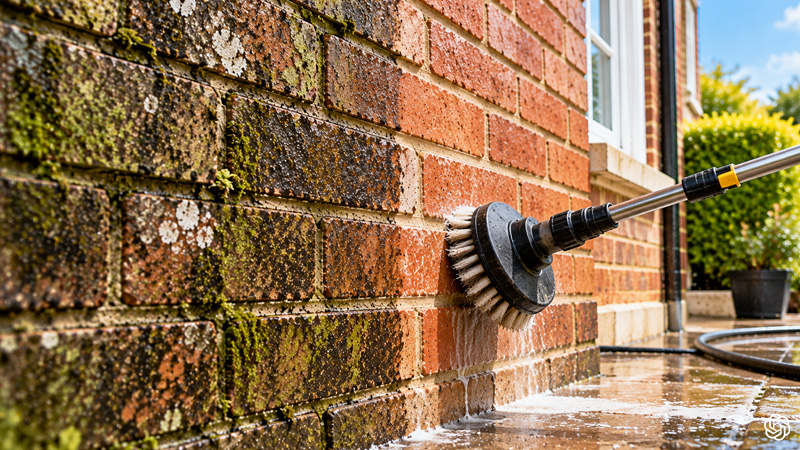
Organic growth is another common cause. Moss and algae can appear where brickwork stays damp or receives limited sunlight. Green or dark patches can spread across walls, particularly when moisture remains around the surface. If this growth is left untreated, the wall can continue to look stained and may become more difficult to clean.
Mortar is another source of unwanted marks. During building work, repairs or repointing, mortar can sometimes be left on the face of bricks. Cement and mortar residue can become hard and difficult to remove once it has dried. Trying to scrape it away aggressively can cause more harm than the original stain.
Paint presents a different challenge. Old paint can cover the natural colour and texture of brickwork, while damaged coatings may flake or become uneven. Paint can also affect how moisture moves through the wall. Removing it therefore requires more thought than simply applying strong pressure.
Efflorescence can also affect the appearance of masonry. This is usually seen as a white or pale powdery deposit on the surface, caused by soluble salts moving through the masonry with moisture. The cause should be considered before cleaning, particularly if the wall continues to experience damp conditions.
Before any cleaning begins, it is worth looking closely at the brick type, mortar condition, previous coatings, staining and areas of damage. A wall that appears to need simple cleaning may also need repairs or repointing.
How Can You Restore the Original Appearance of Dirty Brickwork?
The cleaning method should be chosen according to the brickwork rather than the appearance of the stain alone. This is one of the most important points when restoring an older or heavily stained wall.
A professional assessment can identify whether the main problem is surface dirt, pollution, biological growth, paint, mortar residue or another form of staining. The condition of the bricks and mortar should also be checked. This helps establish whether cleaning is suitable on its own or whether other restoration work needs to be considered.
Chemical brick cleaning can be useful for certain types of stubborn staining because the cleaning solution can help loosen material without relying on excessive pressure. Different products are suited to different contaminants, so using a chemical simply because it is strong is not a sensible approach. The product needs to be appropriate for the brick and the type of deposit being removed.
Moss and algae require a different type of treatment from paint or mortar marks. Organic growth can often be treated using controlled cleaning methods designed to deal with the growth while reducing the chance of damaging the brick face. Low pressure and soft washing techniques may be suitable for some surfaces, depending on their condition.
Paint removal also needs care. Old coatings can be firmly attached to porous bricks, especially where several layers have been applied over time. Scraping too hard or using excessive pressure can remove part of the brick surface along with the paint. A controlled process can help loosen the coating so it can be removed without unnecessary damage.
Water pressure is therefore not always the answer. Bricks may appear hard and strong, but their outer surface can be damaged by unsuitable pressure or abrasive treatment. Once the brick face has been eroded, the original appearance cannot simply be brought back through further cleaning.
Testing a small area first is a sensible part of the process. A test section can show how the brick responds to the selected treatment and give a clearer idea of the expected finish. This is particularly important when working with older brickwork, painted surfaces or buildings with unusual materials.
What Should Happen After the Brick Cleaning?
Cleaning may reveal problems that were previously hidden beneath dirt and staining. Cracked bricks, damaged mortar joints, missing sections or areas of previous repair can become much easier to see once the surface is clean.
This is why brick restoration should not always stop when the wall looks cleaner. If mortar joints have deteriorated, repointing may be needed. Repointing involves removing damaged mortar from the joints and replacing it with suitable new mortar. When carried out correctly, it can improve the appearance of the wall while helping protect the masonry from weather and moisture.
Damaged bricks may also need attention. Depending on the condition, a brick can sometimes be repaired, while badly damaged sections may need replacement with suitable matching bricks. The aim is to keep the repaired area consistent with the existing wall rather than creating an obvious patch.
Colour differences can become more visible after cleaning too. This is normal when older repairs, replacement bricks or different levels of weathering are present. In some cases, brick staining can help blend repaired areas with surrounding masonry. However, this should be considered only after the underlying brickwork has been assessed.
The final appearance also depends on the building itself. Victorian and Edwardian properties, modern homes, garden walls and commercial buildings can all have different brick types and levels of weathering. A method that works on one wall may not be suitable for another.
Dynamic Restoration describes its brick cleaning process as beginning with an assessment before selecting the appropriate cleaning technique. Its wider restoration services also cover brick repair and repointing, which can be considered when cleaning exposes damaged masonry.
The surrounding area also needs protection during the work. Windows, doors, plants, paving and nearby surfaces should be considered before cleaning starts. Controlled preparation helps keep the process focused on the brickwork and reduces unnecessary mess around the property.
For a homeowner, one of the most useful signs of a careful restoration process is that the work is based on the actual condition of the wall. The objective is not simply to remove every visible mark as quickly as possible. It is to improve the appearance while respecting the material underneath.
Once the brickwork has been cleaned and any necessary repairs completed, regular inspection can help keep the surface in good condition. Small areas of moss, algae or staining are generally easier to deal with before they become widespread. Keeping gutters, drainage and surrounding areas in good order can also help reduce persistent moisture around brick walls.
Frequently Asked Questions
How do you restore the original appearance of dirty brickwork?
The process starts by identifying the type of brick, its condition and the cause of the staining. A suitable cleaning method can then be selected to remove dirt, paint, organic growth or other deposits while reducing the risk of damage. Repairs or repointing may be needed if cleaning reveals damaged masonry.
What is the safest way to clean old brickwork?
There is no single cleaning method that is safe for every type of brick. Older or softer bricks may need more controlled treatment than modern masonry. Testing a small area first and selecting a method based on the brick and stain can help reduce the risk of surface damage.
Can brick cleaning remove old paint?
Yes, paint can be removed from brickwork, but the difficulty depends on the type of paint, how many layers are present and how strongly the coating has bonded to the brick. Controlled chemical treatment can be suitable for some painted surfaces, while aggressive scraping or high pressure can damage the brick face.
Can you remove moss and algae from brick walls?
Moss and algae can be treated as part of brick cleaning. The wall should first be assessed to understand why moisture and organic growth have developed. Controlled cleaning methods can then be selected to remove the growth while protecting the brick surface.
Can dirty brickwork be restored without replacing the bricks?
In many cases, cleaning can improve the appearance of existing bricks without replacement. However, severely cracked, damaged or deteriorated bricks may need repair or replacement. The condition of the masonry should be checked before deciding what work is required.