
How to Choose the Right Paint Removal Method
Removing old paint from brick, stone or masonry is not always as simple as stripping away a surface coating. The right paint removal method depends on what is underneath the paint, how strongly the coating has bonded, the condition of the surface and the finish you want to achieve.
This matters because masonry can be damaged by unsuitable cleaning or stripping methods. Aggressive pressure, abrasive techniques or the wrong chemical treatment may remove more than the paint. On older buildings, the outer face of a brick or stone can be particularly important to preserve.
Choosing the right approach starts with understanding the surface and the paint. A careful assessment can help determine whether chemical paint removal, steam cleaning, controlled mechanical work or another method is suitable. Testing a small area before wider work is also an important part of making an informed decision.
What Should You Check Before Choosing a Paint Removal Method?
The first thing to consider is the material beneath the paint. Brick, stone, render, metal and wood all react differently to cleaning and stripping. Even two brick walls can require different treatment because their age, hardness, porosity, mortar and previous repairs may not be the same.
Older brickwork deserves particular care. The outer surface of a brick can be softer than it appears, especially after years of weather exposure. If too much material is removed during paint stripping, the original texture may be permanently changed. Stone can also vary greatly depending on its type, so a method suitable for one stone may not be appropriate for another.
The paint itself is another important factor. A thin layer of masonry paint may respond differently from several thick layers built up over many years. Textured coatings can be especially difficult because they may contain larger amounts of material and can bond strongly to the surface underneath.
You should also look at why the paint is being removed. Some property owners want to reveal original brickwork or stone. Others may be dealing with peeling, cracked or bubbling paint. In some cases, the coating is being removed as part of wider building restoration.
The condition of the wall should be checked before work starts. Cracked bricks, loose mortar, damaged areas and previous repairs can become more noticeable once the paint is stripped away. If moisture has been trapped beneath an old coating, there may also be staining or deterioration that was hidden from view.
Moisture is particularly important when dealing with painted masonry. Brick and stone are porous materials, and moisture can move through them. Where an unsuitable coating restricts this movement, water can become trapped behind the paint. Bubbling, peeling and discolouration can sometimes indicate that the wall needs more attention than another coat of paint.
Dynamic Restoration explains that removing paint from brickwork can allow the building to breathe naturally and says its process uses a specially formulated solution to help break down paint layers. Its service information also notes that paint may remain in pointing and that repointing can be considered afterwards where a better overall finish is required.
Which Paint Removal Method Is Right for Brick and Stone?
There is no single paint removal technique that works for every building. The most suitable method should be selected after looking at the surface, coating and condition of the masonry.
Chemical paint removal is one option for masonry surfaces. A suitable solution can help soften or break down layers of paint so they can be removed with less reliance on aggressive physical force. The product needs to be appropriate for the surface, and the application should be controlled. Stronger does not automatically mean better when working with old brick or stone.
Chemical stripping can be useful where several paint layers have built up. It may help reach coatings that would be difficult to remove by simple scraping. However, the surface still needs to be assessed afterwards because the condition of the brickwork or stone may have been hidden beneath the paint.
Steam cleaning can also be suitable for some surfaces and coatings. Steam uses heat and moisture to loosen certain types of dirt, paint and surface deposits. It can be a useful option where a lower-impact approach is appropriate, but the result depends on the coating and substrate.
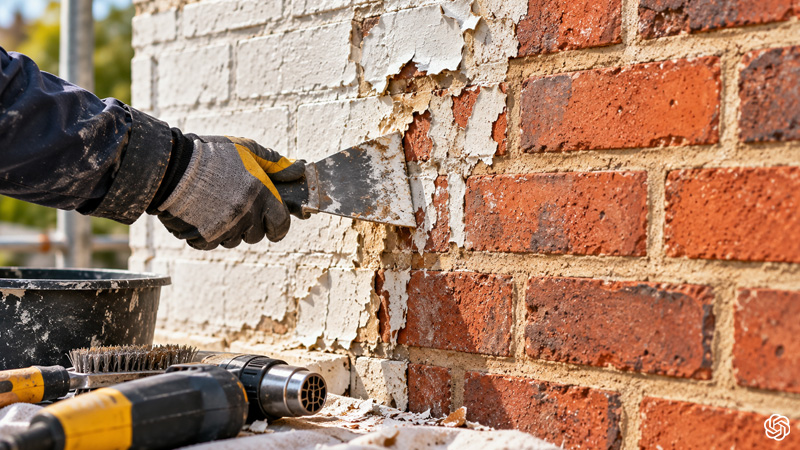
Mechanical methods may involve scraping or other controlled physical techniques. These can be useful for particular areas, especially where loose paint needs to be removed. However, excessive force can mark or erode masonry. The aim should be to remove the coating while leaving the material underneath intact.
Abrasive cleaning is another method used in some restoration work, but it needs careful consideration. Abrasive materials can remove paint quickly, yet they can also affect the surface profile of brick or stone. This makes them unsuitable for some older or delicate masonry.
Pressure washing should also be approached carefully. High pressure can cause damage to softer bricks and mortar joints, particularly when the operator is trying to remove a firmly bonded coating. Water pressure should not be treated as a universal solution simply because it can remove surface material quickly.
A test panel can help compare how a chosen method affects the surface. Dynamic Restoration states that it carries out a free test panel before projects so the result can be assessed and the appropriate technique selected.
This is useful because the appearance of the wall before treatment does not always tell you how it will respond. A small test area can reveal whether the paint is likely to release cleanly, whether multiple treatments are needed and whether the underlying masonry has areas of weakness.
How Can You Tell if Paint Removal Is Being Done Properly?
A good paint removal process is not simply about getting the wall clean as quickly as possible. The condition of the underlying material should remain a key concern throughout the work.
Preparation is important. Nearby windows, doors, paving, plants and other surfaces may need protection. The work area should be assessed before treatment begins, particularly where chemicals or water will be used.
The removal process should also be controlled. If the paint is difficult to remove, increasing pressure or using a harsher method is not necessarily the right response. The surface may need a different treatment instead.
Once the paint has been removed, the exposed masonry should be inspected. You may discover damaged bricks, weak mortar, cracks or previous repairs that were hidden by the coating. This is one reason paint removal can become part of a wider restoration project rather than being viewed as a purely cosmetic job.
Repointing is often considered where old mortar joints have deteriorated. The mortar between bricks is an important part of the wall, and damaged pointing can affect both appearance and weather resistance. However, repointing should be based on the actual condition of the joints rather than carried out automatically.
The final appearance may also vary from one part of the wall to another. Paint can hide differences in brick colour, weathering and previous repairs for many years. Once the coating has gone, these natural variations may become visible.
It is therefore better to judge the finished result in the context of the original building rather than expecting every brick to have exactly the same colour. On older properties, variation can be part of the character of the masonry.
Dynamic Restoration’s project examples include painted façades, porches, chimney breasts and elevations where paint removal has been followed by further restoration work. This shows why the method needs to suit the specific building rather than being selected purely from the type of paint.
If you are unsure which paint removal method is suitable, a site assessment is a sensible starting point. It allows the surface, coating and surrounding conditions to be considered before treatment begins. For older or heavily painted masonry, this can help avoid unnecessary damage and make the restoration process more predictable.
Frequently Asked Questions
What is the best method for removing paint from brick?
There is no single best method for every brick wall. The right approach depends on the brick, paint type, number of layers and condition of the masonry. Chemical stripping, steam and controlled mechanical methods may all have a place, depending on the surface.
Is chemical paint removal safe for brickwork?
A suitable chemical product can be used on some masonry, but it needs to be chosen and applied according to the surface and coating. The strength of the product is not the only consideration. Contact time, preparation, rinsing and the condition of the masonry also matter.
Can pressure washing remove paint from brick?
Pressure washing may remove some paint, but high pressure can damage brick faces and mortar joints. It should not automatically be considered the first choice for painted masonry, particularly where the bricks are old or soft.
How do you remove several layers of paint from brick?
Several paint layers may require a controlled stripping process rather than one aggressive treatment. A suitable paint remover can help break down the layers, after which the loosened coating can be removed carefully. A test area can show how the layers respond.
What should happen after paint is removed from masonry?
The exposed surface should be inspected for damaged bricks, weak mortar, cracks, staining and other issues. The wall may need time to dry and settle before further treatment. Where required, repairs, brick replacement or repointing can then be considered.