
Can Stone Cleaning Damage Listed or Historic Buildings?
Stone cleaning can make an old building look brighter, but on a listed or historic property, the wrong method can do more harm than good. Older stone may be weathered, porous, cracked or weakened by years of exposure. It may also carry carved details, tool marks and signs of age that should not simply be stripped away.
So, can stone cleaning damage listed or historic buildings? Yes, it can if the wrong pressure, chemical treatment, abrasive method or cleaning process is used. However, careful stone cleaning can remove harmful dirt and staining while protecting the original material.
This matters in London, where many older properties use limestone, sandstone, Portland stone and other traditional materials. The safest approach starts with understanding the stone, its condition, previous repairs and the type of contamination present. Dynamic Restoration’s stone cleaning service follows this principle, using assessment and testing before choosing a suitable method.
Why Is Stone Cleaning More Sensitive on Historic Buildings?
Historic stone is not always as strong as it looks. Years of rain, pollution, frost, biological growth and previous repairs can change the surface. A stone facade that appears solid may have a fragile outer layer or areas where the material has already begun to erode.
The age of the building is also important. Older masonry may have been built with traditional materials and construction methods that behave differently from modern stonework. Limestone, for example, can be sensitive to unsuitable chemicals, while porous sandstone can absorb water and cleaning solutions more readily.
Historic buildings can also contain decorative features that need extra care. Carved mouldings, cornices, columns, window surrounds, inscriptions and memorial details may have fine edges that can be damaged by aggressive cleaning. A method that seems acceptable on a modern wall may therefore be unsuitable for an older facade.
What Can Go Wrong With the Wrong Stone Cleaning Method?
One of the main risks is surface erosion. Abrasive cleaning or excessive pressure can remove small amounts of stone along with the dirt. On a soft or already weathered surface, repeated or aggressive cleaning may leave the stone rougher, thinner or more vulnerable to further weathering.
Chemical treatments also need careful control. Different stones react differently to cleaning products. A treatment that works on one material may stain, weaken or alter another. This is particularly important with limestone and other calcium-based stones, where unsuitable acidic products can cause surface damage.
Water can create problems too. Porous stone can absorb moisture, especially when it has been neglected for a long time. Excessive water, poor drying conditions or an unsuitable cleaning process can increase moisture-related problems. This does not mean water-based cleaning is always unsafe. It means the amount, pressure, temperature and method need to suit the building.
That is why stone cleaning should not begin with the assumption that the same technique can be used across the whole property. The building needs to be assessed first.
How Should Listed and Historic Stone Buildings Be Cleaned?
The first step is assessment. Before cleaning begins, the stone type, surface condition, staining and previous treatments should be considered. Areas that look loose, cracked, heavily weathered or unusually delicate need particular attention.
A small test area can be useful because it shows how the stone responds before the method is applied more widely. Dynamic Restoration states that it carries out a free test panel so the result can be assessed and the appropriate technique selected. This approach is especially useful where the surface is old, decorative or difficult to replace.
The cleaning method should then match the material and the type of contamination. Gentle steam cleaning, fine spray methods, controlled chemical treatments, poultices and manual cleaning can all have a place in stone restoration. The important point is that no single method is suitable for every historic building.
Nebulous spray cleaning, for example, can be appropriate for very sensitive stone because it uses a fine mist to soften surface dirt without saturating the material. DOFF steam cleaning can also be used where controlled heat and moisture are suitable. For stubborn marks such as oil, rust or paint, a poultice may be considered. Decorative carvings and inscriptions may need soft brushes or hand tools instead.
The goal is not simply to make the stone look new. It is to remove harmful or unwanted deposits while keeping as much original material and character as possible.
Historic stone cleaning also needs attention to surrounding areas. Windows, doors, roof details, paving and nearby surfaces may need protection from water, cleaning products or loosened deposits. Good preparation helps keep the work controlled and reduces the chance of secondary damage.
Where the building has carved stone or memorial features, the cleaning process may need to be slower and more manual. Fine lettering, shallow carvings and worn edges can be difficult to restore once material has been removed. Protecting these details is therefore part of the cleaning decision, not an extra step after the work begins.
Listed Building Consent and Conservation Considerations
Owners of listed buildings should also consider whether permission is required before work starts. Listed Building Consent may be needed for works that affect the special architectural or historic interest of a listed property. The exact requirements depend on the building and the proposed work, so owners should check with the relevant local authority or conservation professional before starting.
Cleaning may appear less significant than structural alterations, but it can still affect historic fabric. This is why a careful cleaning proposal should explain what will be cleaned, why it needs cleaning, which method will be used and how vulnerable features will be protected.
What Happens After Historic Stone Cleaning?
Cleaning can reveal problems that were hidden beneath years of dirt. Cracks, open joints, previous repairs, missing mortar or areas of stone decay may become easier to see once the surface is clean.
This is not necessarily a problem with the cleaning process. In many cases, it is useful information. It allows the condition of the masonry to be assessed more accurately and can help identify whether further conservation work is needed.
A professional assessment can therefore be valuable even when the property only appears to have a staining problem. It can help distinguish ordinary surface dirt from biological growth, pollution deposits, mineral staining or signs of deeper deterioration.
Frequently Asked Questions
Can stone cleaning damage a listed building?
Yes, stone cleaning can damage a listed building if unsuitable chemicals, pressure, abrasive techniques or excessive water are used. The risk is reduced when the stone is assessed first and the cleaning method is selected for its material, condition and historic features.
Is chemical stone cleaning safe for historic buildings?
Chemical cleaning can be suitable for historic stone, but it depends on the stone and the product being used. Treatments should be selected carefully and tested before wider application, particularly on porous or delicate materials.
What is the safest method for cleaning old stone?
There is no single safest method for every building. Gentle steam, fine spray, controlled chemical treatment, poultices or manual cleaning may be appropriate depending on the stone and contamination. The safest choice is the method that removes the deposit while causing the least change to the original material.
Can pressure washing damage historic stone?
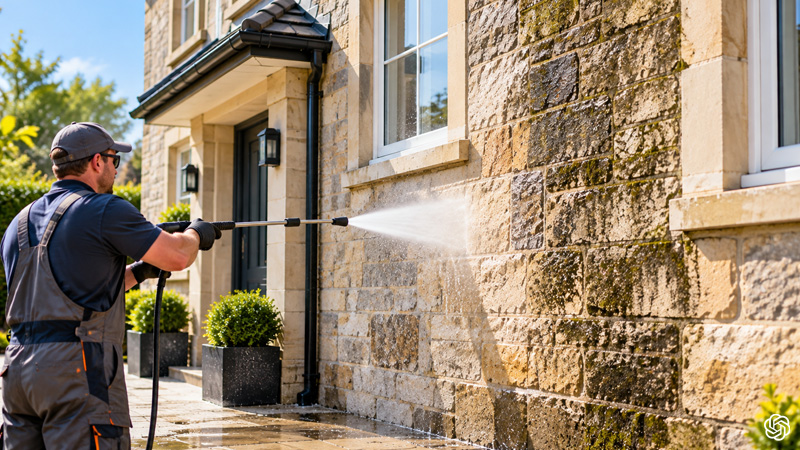
Yes. High pressure can erode weak stone, damage carved details and affect mortar joints. Historic surfaces should not automatically be treated in the same way as modern paving or robust masonry.
Do I need permission to clean a listed building?
You may need Listed Building Consent if the proposed work affects the building’s special historic or architectural interest. Requirements vary, so it is sensible to check with the local planning authority or a conservation professional before work begins.