
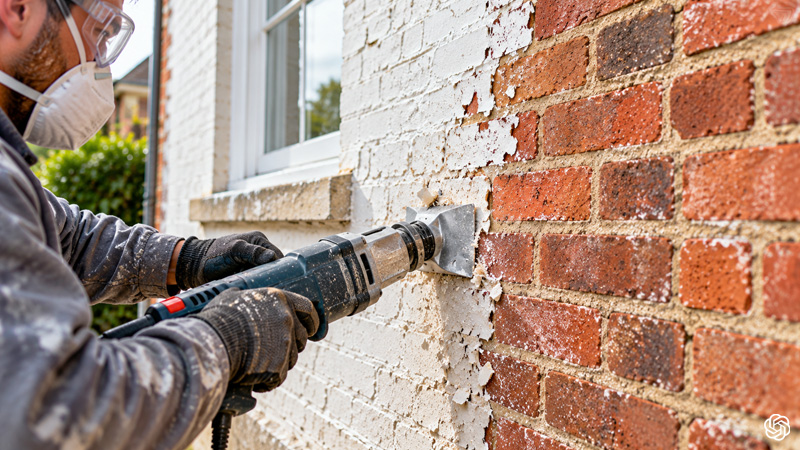
How to Remove Paint From Brick Without Damaging It
Paint can completely change the appearance of brickwork. A painted wall may hide the original colour and texture of the bricks, while old or peeling coatings can make an otherwise attractive property look tired. Removing the paint can reveal the natural brick beneath, but it needs to be done with care.
So, how do you remove paint from brick without damaging it? The answer depends on the type of paint, the age and condition of the brick, how deeply the coating has soaked into the surface, and the method used to remove it. Bricks are porous, so paint can grip the surface more firmly than it first appears.
Using too much pressure, aggressive scraping or the wrong abrasive method can remove more than the paint. It can damage the outer face of the brick, weaken mortar joints and leave marks that are difficult to repair. Careful brick cleaning starts with understanding the surface before choosing a removal method.
Why Is Removing Paint From Brick So Difficult?
Brick may look hard and solid, but its surface contains many tiny pores. Paint can settle into these pores and form a strong bond with the masonry. Older coatings may also have been exposed to years of sunlight, rain and temperature changes, making them harder to remove.
The type of paint makes a difference. Masonry paint, acrylic coatings, oil-based paint, limewash and other exterior finishes can behave differently during removal. A wall with several layers of old paint can be even more difficult because each layer may respond differently to the same treatment.
The condition of the brick is equally important. Older bricks can be softer than modern engineering bricks. Weathering may already have affected the surface, while previous repairs can leave areas with different materials or mortar types. A method that works well on a strong modern brick may therefore be unsuitable for an older wall.
This is why paint removal from brick should not simply involve choosing the strongest product or highest pressure available. The aim is to loosen the coating while keeping the brick face and mortar in good condition.
Old paint can also cause problems beyond appearance. Where an exterior coating has cracked or deteriorated, moisture can enter through gaps. If the coating restricts the natural movement of moisture through the wall, damp can become trapped within the masonry. Removing an unsuitable coating may therefore be part of restoring the wall’s natural appearance and allowing it to breathe more freely.
What Is the Safest Way to Remove Paint From Brick?
There is no single paint removal method that is right for every brick wall. A suitable approach starts with an inspection of the brickwork and the paint itself. This helps establish whether the masonry is sound, whether the coating is loose or firmly bonded, and which areas need extra care.
A small test area is particularly useful. It allows the response of the paint and brick to be checked before work continues across the full surface. Dynamic Restoration uses free test panels as part of its approach, helping to determine a suitable technique and giving the property owner an idea of the expected result.
For many brick paint removal projects, controlled chemical cleaning can be a suitable option. Instead of relying on force to scrape the coating from the wall, a suitable treatment can soften or break down the paint. The loosened coating can then be removed with controlled brushing, scraping or rinsing, depending on the surface.
The important word is controlled. Chemical products should be selected according to the coating and masonry. They should not simply be applied without considering the brick, mortar, surrounding surfaces or drainage. After treatment, residues may also need to be removed and the surface thoroughly rinsed.
Gentle manual work can also have an important role. Areas around decorative brickwork, corners, joints, windows and other sensitive details may need slower treatment. This can help prevent accidental damage to the brick edges or mortar.
High-pressure washing is not automatically the best choice. Strong pressure can damage the outer surface of weathered bricks and may erode mortar joints. Abrasive methods such as aggressive grit blasting can also mark or remove the brick face. Wire brushing can create scratches, particularly where the brick is soft.
Heat and steam also need to be used with care. Although steam cleaning can be suitable for some masonry cleaning projects, the temperature, moisture and condition of the surface must be considered. Older brickwork can react differently from newer masonry.
The safest method is therefore not necessarily the gentlest-looking method. It is the method that removes the paint effectively while causing the least possible damage to the original brick and mortar.
How Does Professional Brick Paint Removal Work?
Professional brick paint removal usually begins with a close inspection. The condition of the bricks, mortar joints and existing coating needs to be understood before the work starts. Areas that are cracked, crumbling or heavily weathered may require a different approach from sound brickwork.
The paint type is then considered. Thick layers may need to be softened gradually rather than removed in one aggressive operation. If several coatings are present, the process may need to be repeated carefully so that the underlying brick is not attacked.
Protection is another important part of the work. Windows, doors, paving, plants and nearby surfaces can be affected by cleaning products or loosened paint. Dynamic Restoration states that it assesses the area before projects and uses protective plastic sheeting where necessary.
Once the preparation is complete, the selected treatment can be applied to a controlled area. The purpose is to loosen the paint rather than force it away with excessive pressure. The softened coating can then be removed carefully.
After the main paint has been removed, some staining or residue may remain in the pores of the brick. Further cleaning may be needed to improve the overall finish. This stage needs patience because trying to remove every last mark by force can cause more damage than leaving a small amount of historic staining.
The cleaned surface should then be inspected again. Paint removal can reveal defects that were previously hidden. Cracked bricks, damaged mortar, old repairs or areas of surface erosion may only become obvious once the coating is gone.
This is one reason a professional assessment can be useful. The job is not simply about making the wall look clean. It is also about understanding what is underneath the coating and deciding whether any further brick repairs or repointing are needed.
For older homes and period properties, preserving character is especially important. The goal should not always be to make every brick look completely new. Variations in colour, texture and weathering can form part of the building’s appearance. Good brick cleaning should reveal the masonry without unnecessarily removing its natural character.
Frequently Asked Questions
Can paint be removed from brick without damaging it?
Yes. Paint can often be removed safely when the brick, mortar and coating are assessed first and the method is chosen accordingly. Controlled chemical treatment and careful manual removal can reduce the need for aggressive scraping or abrasion.
What is the best paint remover for brick?
There is no universal paint remover for every brick wall. The most suitable product depends on the type of paint, the masonry and the condition of the surface. A small test area can help show how the coating and brick respond before wider treatment.
Can I pressure wash painted brick?
Pressure washing can sometimes be used for masonry cleaning, but high pressure can damage brick faces and mortar joints, particularly on older or weathered walls. It should not be treated as the automatic solution for removing paint from brick.
Does paint removal damage old bricks?
It can if the wrong technique is used. Old bricks may have softer surfaces or existing weathering, making them more vulnerable to aggressive pressure, abrasion and unsuitable chemicals. Careful assessment is especially important for older properties.
Is professional brick cleaning better than DIY paint removal?
Professional brick cleaning can reduce the risk of damaging the masonry because the process begins with assessment and method selection. This is particularly useful when the wall is old, painted in several layers, weathered or difficult to access.