
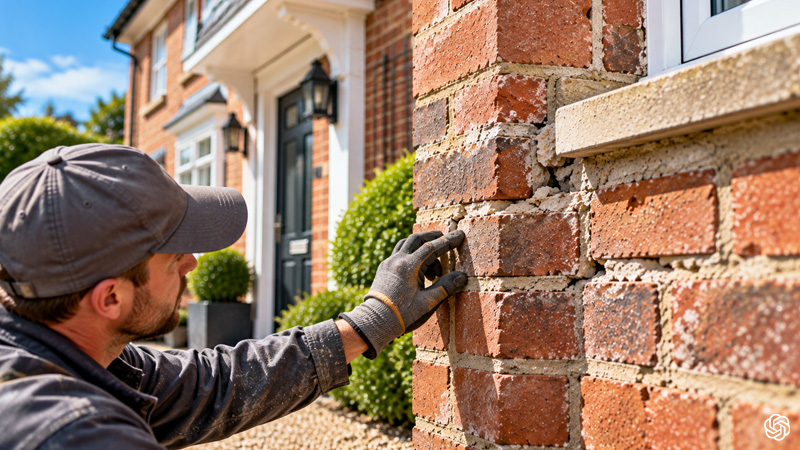
What Are the Signs That Brickwork Needs Repointing?
Mortar joints are easy to overlook because the bricks usually attract more attention. Yet the mortar between those bricks plays an important role in keeping a wall protected from rain, wind and everyday weathering. As mortar ages, it can crack, crumble or wash away. Knowing the signs that brickwork needs repointing can help you deal with small defects before they become a much larger masonry problem.
Repointing means removing damaged or failing mortar from brick joints and replacing it with fresh mortar. It is not simply a cosmetic repair. When joints are badly worn, water can enter the wall more easily, bricks can become exposed to greater weathering, and damp may develop. The right time to repoint depends on the condition of the mortar, the age of the building, the type of brick and mortar used, and how exposed the wall is.
What Are the Main Signs That Brickwork Needs Repointing?
Cracked mortar is one of the clearest signs. You may see fine lines through the joints or larger breaks where the mortar has lost its bond. Cracks can develop through weathering, movement, frost and age. Small cracks do not always mean the whole wall needs repointing, but they are worth checking.
Missing mortar is another warning sign. If sections have fallen away and deeper gaps are visible between bricks, the wall has less protection from rain. Deeply recessed joints can also hold water against the masonry.
Crumbling or powdery mortar suggests significant deterioration. If the surface turns to dust when touched, or pieces keep falling away, the joints may have reached the point where repair is needed. This is especially important on older brick walls because traditional mortar can behave differently from modern cement-based mixes.
Damp marks inside the property can sometimes be linked to failing external mortar, although damp has many possible causes. Water can enter through open joints and contribute to staining or moisture on internal walls. Moss, weeds or other growth around joints can also indicate that moisture is lingering.
Chimneys, parapets and exposed elevations deserve particular attention because they receive more wind and rain. Mortar in these areas can deteriorate faster, and loose joints at height can create a safety concern.
Why Does Brickwork Mortar Fail and When Should You Repoint?
Mortar does not last forever. Repeated wetting and drying, frost, pollution and general exposure can gradually weaken joints. Frost can be particularly damaging when water enters small gaps, freezes and expands.
The age and construction of the building matter too. Older properties may have been built with lime mortar, which is softer and more breathable than many modern cement-rich mixes. Lime mortar can accommodate some movement and allows moisture to pass through the wall. A mortar that is too hard can create problems for softer historic bricks.
Choosing the right mortar is therefore as important as spotting the need for repointing. A repair should suit the existing brickwork. On older buildings, a compatible lime mortar may be appropriate, while modern properties may require a different formulation. Brick type, exposure and condition should all be considered.
You do not need to repoint a wall simply because it is old. The more useful question is whether the mortar is still protecting the masonry. If joints are only slightly weathered, local repairs may be enough. If mortar is missing across large areas, deeply recessed or allowing water to enter, more extensive repointing may be needed.
The brickwork itself should also be checked before mortar is removed. Damaged bricks, previous repairs, paint or render can affect the approach. Removing sound mortar unnecessarily can damage brick edges, so work should focus on joints that have genuinely failed.
Professional assessment can help when the condition is unclear. Dynamic Restoration describes restoring mortar joints to improve the strength and weather resistance of brickwork, with attention to different property types, including older buildings. Its website also describes site assessment and chemical mortar removal techniques where appropriate. The principle is simple: repointing should be based on the actual condition of the wall.
What Happens During Brickwork Repointing?
Good repointing starts with preparation. The damaged joints need to be identified, and the surrounding brickwork should be protected. Where old mortar is removed, the process needs to be controlled so the brick edges are not unnecessarily damaged.
The depth of mortar removal depends on the condition of the joints and the type of repair required. Once weak mortar has been removed, the joints are cleaned and prepared for new mortar. The new mix should be compatible with the existing masonry and appropriate for the building.
For heritage or older properties, this stage deserves particular care. The wrong mortar can be harder than the brick itself and may prevent the wall from managing moisture naturally. Over time, this can contribute to damage around the brick rather than protecting it.
After new mortar is placed, the joints are finished to suit the existing brickwork. Another important consideration is the finish of the joint. The new mortar should be pressed into properly prepared joints and finished so that it sheds water rather than creating ledges that collect it. Colour and texture also matter on visible facades, particularly where only part of a wall is repaired. A good repair should sit naturally with the existing masonry instead of drawing attention to the new work.
Repointing can often improve the appearance of a tired brick facade, but its main purpose is protection. Sound mortar helps reduce routes for rainwater and supports the brickwork as part of the wall system. It can also reveal other defects that need attention, such as cracked bricks, movement or damaged areas around windows and chimneys.
The key is not to wait for severe failure. If you notice powdery joints, missing mortar, open cracks, damp staining or areas where the joints have become deeply recessed, it is sensible to have the brickwork assessed. Early investigation can clarify whether a small repair, localised repointing or more extensive work is needed.
Frequently Asked Questions
How do I know if my brickwork needs repointing?
Look for cracked, missing, loose, powdery or deeply recessed mortar. Damp marks inside the property and visible gaps between bricks can also be warning signs. An inspection is useful because surface appearance does not always show how far mortar deterioration has progressed.
How often should brickwork be repointed?
There is no fixed interval that applies to every property. The lifespan of mortar depends on its material, workmanship, weather exposure, building age and local conditions. Brickwork should be repointed when the joints show meaningful deterioration rather than simply because a certain number of years has passed.
Can damaged mortar cause damp?
Yes, damaged or missing mortar can provide routes for rainwater to enter masonry. However, damp can have many causes, including roof defects, plumbing leaks, condensation and damaged pointing around openings. The wall should therefore be assessed before assuming repointing is the only solution.
Is repointing suitable for old or listed buildings?
It can be, but older and listed buildings often need more careful material selection. Many traditional properties use lime mortar, and the replacement mortar should be compatible with the existing brickwork. Conservation requirements may also apply to listed buildings, so specialist advice can be appropriate.
Is chimney repointing different from wall repointing?
The basic principle is similar, but chimneys are more exposed to wind, rain and frost and are also located at height. Their condition should be checked carefully, particularly where mortar is missing or bricks are loose. Safe access and appropriate repair methods are important.