
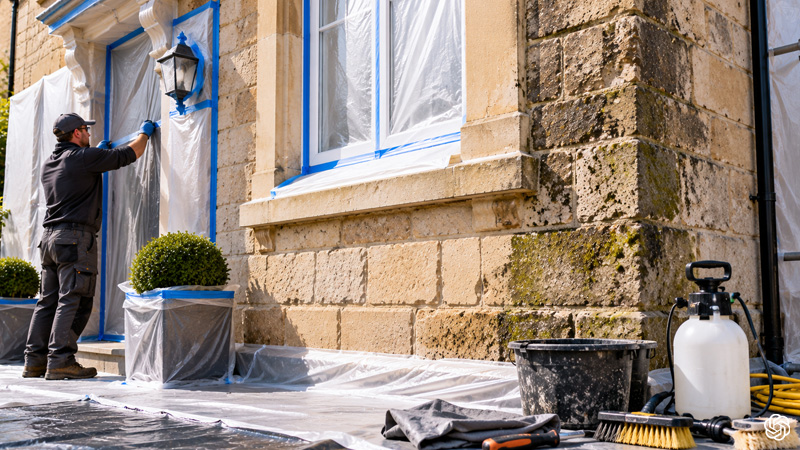
How to Prepare Your Property for Professional Stone Cleaning
Professional stone cleaning can make a major difference to the appearance of an older facade, wall, entrance, pathway or architectural feature. Dirt, pollution, algae, moss, staining and weathering can build up over time, hiding the natural colour and texture of stone. However, good results do not begin when the cleaning equipment arrives. They begin with proper preparation.
Preparing your property for professional stone cleaning helps protect surrounding areas, gives the contractor a clearer working space and allows the stone to be assessed before the cleaning method is chosen. This is particularly important when working with older buildings, delicate stone, decorative details or surfaces that have not been cleaned for many years.
If you are planning stone cleaning, you may wonder what you need to do beforehand. In most cases, preparation is quite simple, but there are several things worth checking before work begins. Understanding the process can also help you know what to expect and why an assessment is an important part of professional stone cleaning.
What Should You Check Before Professional Stone Cleaning?
The first step is to look at the condition of the stone. Stone can appear dirty when there are actually other issues beneath the surface. Cracks, loose sections, damaged joints, previous repairs and areas of erosion may become more visible once the dirt has been removed.
Take a close look at the areas you want cleaned and consider whether the stone has any obvious damage. Pay particular attention to corners, carved details, window surrounds, steps, copings and other areas that may have suffered more weathering. If the building is old or listed, its historic character should also be considered before any cleaning method is selected.
It is also useful to think about what is causing the staining. Stone can become marked by traffic pollution, bird deposits, algae, moss, rust, paint, organic growth and general dirt. Different deposits may need different cleaning approaches. Trying to remove everything with the same treatment can create unnecessary risk.
The type of stone matters as well. Limestone, sandstone, Portland stone, slate and other natural stones do not all respond in the same way to water, chemicals, heat or pressure. Porous stone can absorb moisture and cleaning products, while softer surfaces can be more vulnerable to abrasion.
This is why professional stone cleaning should begin with an assessment rather than immediately applying a strong cleaning treatment. Dynamic Restoration states that it assesses the area before starting a project and provides a free test panel to help determine an appropriate technique. This gives the contractor an opportunity to see how the surface responds before the method is used across a larger area.
A test panel can be especially useful when the stone is old, stained or difficult to identify. It can show the likely finish while helping reveal whether the chosen method is suitable for the material.
How Can You Prepare the Property and Surrounding Areas?
Once the stone has been assessed, practical preparation becomes important. Clear access is one of the simplest ways to make the work easier. Remove garden furniture, pots, decorations and other movable items from the immediate working area where possible. If the stone is around a doorway or pathway, make sure the contractor can reach the surface without unnecessary obstacles.
Windows and doors should also be considered. Cleaning can involve water, steam, chemical treatments or loosened deposits, depending on the method selected. Sensitive areas around the work zone may need protection before cleaning begins.
Plants, lawns, paving and nearby surfaces should also be taken into account. Professional contractors normally assess the surrounding area and use suitable protection where required. Dynamic Restoration specifically states that it uses high-quality plastic sheeting where necessary to protect the property during restoration work.
You do not normally need to cover every part of your property yourself. It is more useful to make the work area accessible and tell the contractor about anything that needs particular attention. For example, you may have a delicate garden feature, newly painted window frame, fragile paving or decorative stone that should not be treated.
If the stone is inside a courtyard, garden or restricted space, access should be discussed before the cleaning date. Equipment may need to be positioned in a particular area, and the contractor may need enough room to work safely around the surface.
It is also worth considering parking and access for equipment. Larger stone cleaning projects can require hoses, cleaning systems and other equipment to be brought close to the building. Good access can reduce unnecessary movement around the property and help keep the working area organised.
Before cleaning starts, it is useful to remove loose objects from windowsills, steps and nearby ledges. This gives the contractor a clearer view of the stone and reduces the chance of items being affected by the cleaning process.
What Happens During Professional Stone Cleaning?
Once the property is prepared, the cleaning process should be based on the condition and material of the stone. There is no single method that works for every surface. Dynamic Restoration’s stone cleaning information describes methods including DOFF steam cleaning and TORC cleaning, alongside controlled chemical treatments for suitable surfaces.
DOFF steam cleaning uses superheated water at controlled pressure and can be useful for certain delicate stone and masonry surfaces. It may help remove biological growth, dirt and some coatings without relying on heavy abrasion. However, suitability still depends on the stone and its condition.
TORC cleaning combines air, water and a fine aggregate to deal with more stubborn deposits. It can be useful where ordinary cleaning is not enough, but the method still needs to be controlled according to the surface being treated.
Chemical stone cleaning can also be suitable for certain types of contamination. A carefully selected treatment can help break down pollution, biological growth or staining without relying solely on high pressure. The product, concentration, application and removal process all need to be appropriate for the stone.
The important point is that preparation does not mean choosing a cleaning method yourself. It means giving the contractor the information and access needed to assess the property properly. The test area can then help confirm the most suitable approach.
During cleaning, the appearance of the stone may change gradually. Years of dirt can hide natural variations in colour and texture, so the final surface may not look exactly the same as new stone. This is particularly relevant to historic buildings, where weathering and small variations may form part of the property’s character.
After cleaning, the stone should be inspected again. Removing surface deposits can reveal cracks, damaged mortar, old repairs or areas of deterioration that were difficult to see beforehand. This can be useful because it gives the owner a clearer picture of the property’s actual condition.
If further work such as repointing, repair or paint removal is needed, it can then be considered based on what has been uncovered. Stone cleaning is therefore not only about appearance. It can also provide a clearer opportunity to understand the condition of the external masonry.
Frequently Asked Questions
Do I need to clean the property before professional stone cleaning?
No. The purpose of professional stone cleaning is to remove dirt, staining and other deposits from the stone. You can help by clearing loose objects and providing good access, but the cleaning itself should be assessed and carried out by the contractor.
Should I move garden furniture before stone cleaning?
It is sensible to move garden furniture, pots and other loose items away from the immediate work area where possible. This gives the contractor better access and helps protect your belongings during the cleaning process.
How long does it take to prepare a property for stone cleaning?
Preparation time depends on the size and condition of the property, access, surrounding surfaces and amount of protection required. A small area may need little preparation, while a large historic facade can require more careful planning.
Will stone cleaning remove every stain?
Not necessarily. Some stains can penetrate deeply into porous stone or may be linked to older deterioration. The purpose of professional cleaning is to improve the surface while avoiding unnecessary damage, rather than forcing every mark away at any cost.
Should stone be repaired before cleaning?
It depends on the condition of the stone and the type of repair needed. Some defects are easier to assess after surface dirt has been removed, while loose or unsafe areas may need attention before cleaning. A proper inspection can help determine the correct order of work.