
Common Brick Cleaning Mistakes That Can Damage Brickwork
Brick cleaning can make a tired exterior look fresh again, but the wrong method can cause damage that is harder to fix than the original stain. Brick is strong, yet its outer face and the mortar around it can be affected by pressure, chemicals, moisture and poor cleaning techniques. This is especially important with older or softer bricks, where aggressive treatment may remove more than dirt.
Common brick cleaning mistakes include using too much pressure, choosing chemicals without checking the masonry, using abrasive brushes, cleaning without a test area and treating every stain in the same way. A safe approach starts with understanding the brick, mortar, age of the building and type of contamination.
Dynamic Restoration assesses the area before work begins and uses a test panel to help determine a suitable cleaning technique. Understanding what can go wrong is useful for homeowners, landlords and property managers considering brick cleaning.
What Are the Most Common Brick Cleaning Mistakes?
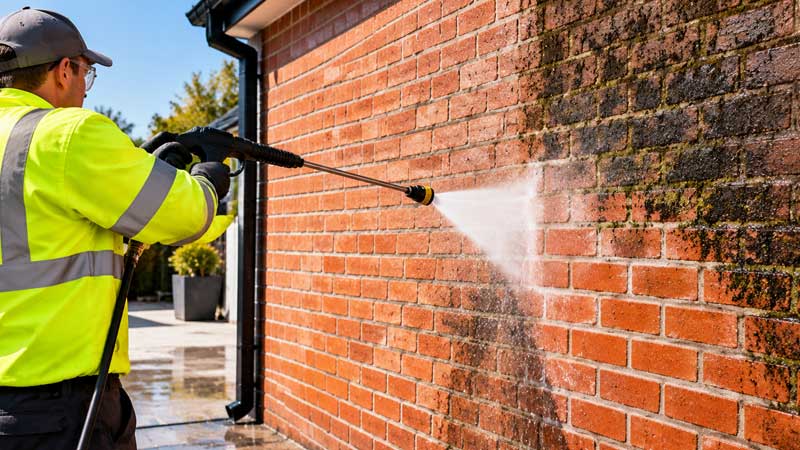
One of the biggest mistakes is assuming that a pressure washer is suitable for every brick wall. High pressure can remove dirt quickly, but it can also damage softer or weathered bricks. It may erode mortar joints, expose weaker material and force water into areas where it can create further moisture problems. A wall that looks cleaner immediately may therefore be left in poorer condition.
Another mistake is using harsh chemicals without identifying the brick and the stain. Paint, cement residue, carbon staining, algae, moss and efflorescence do not all behave in the same way. A treatment that works on one type of contamination may be unsuitable for another. Strong chemicals can affect brick colour, damage the surface or harm mortar if they are used incorrectly.
Older properties need particular care. Traditional bricks can be more porous and less resistant to aggressive cleaning than some modern bricks. Historic masonry may also contain lime mortar or previous repairs that need to be considered. Treating an old façade like a modern brick wall can create unnecessary damage.
Hard wire brushes are another common problem. Scrubbing may seem like a simple way to remove marks, but abrasive tools can scratch the brick face and change its texture. Once damaged, the surface may be more exposed to weathering and moisture. A suitable method should remove unwanted material without unnecessarily changing the original masonry.
Some property owners also clean only the visible stain. If moss, algae or dark staining is linked to persistent moisture, blocked gutters, poor drainage or shaded conditions, the same problem may return. Cleaning can improve the surface, but the cause may need attention as well.
Why Can Incorrect Brick Cleaning Damage Masonry?
Brick is not simply a solid block with colour on the outside. Its surface has a texture and structure that can be affected by mechanical force and chemical treatment. When aggressive cleaning removes part of the outer face, the brick can become more vulnerable to weather and moisture.
Mortar joints are also important. They help hold the wall together and protect the edges of the bricks. Excessive pressure or unsuitable products can weaken or remove mortar. If joints are already deteriorated, cleaning may expose problems hidden by dirt. This is why brick cleaning should not be viewed as a simple washing job.
Efflorescence is often misunderstood. The white deposits seen on brickwork are usually salts brought to the surface by moisture movement. Repeatedly washing them may not solve the underlying issue. If moisture continues to move through the wall, the deposits can return, so the cause needs to be considered alongside the appearance.
Paint removal presents another risk. Old masonry paint can be strongly bonded to brick and may have been applied in several layers. Scraping aggressively or using unsuitable solvents can damage the brick beneath the coating. Paint removal therefore needs to consider the coating, masonry and how strongly the paint is attached.
The same principle applies to cement or mortar stains left after building work. Trying to remove hardened residue with force can damage the surrounding brick. A controlled treatment that considers the type of residue is preferable to simply increasing pressure.
A test panel is useful because brickwork can respond differently from one property to another. It gives the cleaning professional an opportunity to assess the result on a small area before treating the full façade. Dynamic Restoration states that it carries out a no obligation test panel to help determine the appropriate technique and show the expected result.
How Can You Avoid Brick Cleaning Mistakes?
The safest starting point is a proper assessment. Before cleaning begins, look at the brick type, age, surface condition, mortar joints and type of staining. Previous paint, render, repairs and coatings should also be considered. This information helps determine which method is appropriate.
The cleaning process should then be matched to the masonry rather than chosen simply because it is commonly used. Depending on the surface and contamination, controlled washing, specialist chemical treatment or another low impact method may be suitable. The aim is to remove unwanted material while keeping the original brick face and mortar in good condition.
Protecting surrounding areas is also part of careful work. Windows, doors, plants, paving and nearby surfaces may need protection before cleaning begins. This helps control water, cleaning products and loosened material during the work.
Brick cleaning can reveal problems that were previously hidden. Cracked bricks, damaged mortar, spalling, moisture marks and failed repairs may only become obvious after dirt and coatings are removed. These issues should be assessed rather than covered up again.
For this reason, brick cleaning can form part of a wider restoration plan. Repointing may be needed where mortar joints have deteriorated. Individual damaged bricks may need repair or replacement. Paint or render removal may expose original masonry and help determine what work should happen next.
Frequently Answered Questions
What chemicals should I use to clean brickwork?
There is no single chemical that suits every brick or stain. The correct treatment depends on the contamination and masonry. Using an unsuitable product can cause discolouration or surface damage, so testing should come before full application.
Can brick cleaning damage old bricks?
Yes. Older and softer bricks can be more sensitive to aggressive pressure, abrasive tools and unsuitable chemicals. Historic buildings may also have traditional mortar that needs careful treatment. The age and condition of the masonry should be considered before cleaning.
Can a wire brush damage bricks?
A hard wire brush can scratch or wear the surface of brickwork, particularly when used with strong pressure. It may remove staining but can also alter the texture. A less abrasive method may be more suitable.
Can brick cleaning damage mortar?
Aggressive cleaning can affect mortar joints, especially when they are already weak or weathered. Pressure and cleaning products should therefore be controlled. After cleaning, damaged joints should be inspected to see whether repointing is required.
Is brick cleaning safe for Victorian or period properties?
It can be, but period properties need careful assessment. Older bricks, traditional mortar, previous repairs and accumulated coatings can affect the cleaning method. A test area and controlled approach can help reduce the risk of damage.
Brick cleaning should never be treated as a case of applying the strongest product or highest pressure until the dirt disappears. The condition and type of masonry should guide the process. Pressure, chemicals, abrasive tools and water all need to be controlled so the cleaning improves the appearance without creating new problems.
For homeowners and property managers, the most useful first step is to understand what is causing the staining and what condition the brickwork is already in. A careful assessment and test panel can make it easier to choose a suitable method and identify repairs that may need attention after cleaning. When the process is planned around the building rather than a one size fits all technique, brick cleaning can restore the appearance while respecting the character and condition of the masonry.