
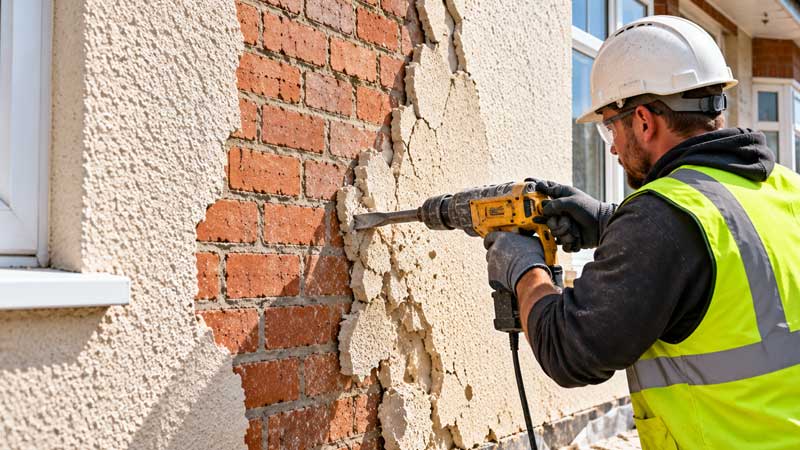
Does Render Removal Improve the Appearance of a House?
A house can look very different when old render is removed. What once appeared to be a plain, rough or tired exterior may reveal original brickwork, interesting details and the character of the building underneath. This is one reason render removal is considered by homeowners who want to change the look of their property.
However, removing render is not simply a cosmetic job. Old render can cover cracks, damaged bricks, worn mortar and signs of moisture. Taking it away can expose these issues and give the wall a chance to be assessed properly. The result may be a cleaner appearance, but the success of the project depends on the condition of the masonry and how carefully the render is removed.
If you are wondering whether render removal will improve the appearance of your house, it helps to understand what can be revealed, what can go wrong and what should happen after the render has been taken away.
Why Can Render Removal Improve the Appearance of a House?
The most obvious benefit of render removal is that it can reveal the original surface of a building. Many older homes were built with attractive brickwork that was later covered with render or pebbledash. Once the covering is removed, the colour, texture and pattern of the brick can become a major feature of the exterior.
A rendered frontage may have a flat or heavily textured appearance, while exposed brick can add depth and detail. On period homes, removing worn or unsuitable render may also reveal architectural features that were hidden, such as brick arches, decorative courses or changes in brick pattern.
The condition of the existing render also affects appearance. Cracks, staining, loose patches, discolouration and crumbling areas can make an exterior look neglected even when the rest of the property is well maintained. Removing a failed surface can create a cleaner starting point for restoration.
There is an important point, though. A good appearance depends on what is underneath the render. If the brickwork has been damaged, heavily stained or poorly repaired, simply removing the render will not automatically produce a finished-looking façade. Cleaning, repointing or local brick repairs may be needed before the wall reaches its full potential.
Can Render Removal Reveal Problems With Brickwork?
Yes. This is one reason render removal should be approached as a restoration project rather than a simple surface change. Render can hide the condition of masonry for years. Once it has been removed, problems that were not visible from outside can become clear.
Cracked bricks, damaged mortar joints, staining and areas affected by moisture may all be revealed. Previous repairs can also be found beneath the render, including hard cement mortar, replacement bricks or patches that do not match the original wall.
Moisture is a particular concern. Cracked or failing render can allow rainwater to enter behind the surface. If moisture remains trapped between render and brickwork, it can contribute to damp conditions and deterioration. Removing the outer layer allows the wall to be inspected and any visible issues to be considered before the final finish is chosen.
The condition of the bricks is also important because removal itself can cause damage if carried out aggressively. Older bricks may be softer than modern materials, and their edges can chip when hard tools or excessive force are used. Mortar joints can also be disturbed.
Dynamic Restoration’s render removal service describes inspection and a small test area before larger sections are treated. The company then uses controlled removal methods, followed by assessment and cleaning where needed. The key principle is simple: remove the unwanted covering while protecting the masonry underneath.
What Does a House Look Like After Render Removal?
The final appearance depends on the condition and type of brickwork beneath the render. Some houses reveal strong, even brickwork that needs little more than careful cleaning. Other properties show old repairs, weathered bricks or mortar that needs attention.
Brick cleaning can make a major difference after render removal. Cement remnants, surface dirt and staining may remain on the exposed wall, so the brickwork may not immediately look like the finished result. Appropriate cleaning can help bring back natural colour and texture without treating every wall in the same way.
Repointing may also be needed where mortar joints are open, loose or badly weathered. New pointing should be compatible with the existing masonry. This is particularly important for older buildings where brick and mortar were designed to work together and allow moisture to move through the wall.
Some homeowners choose to keep the brickwork exposed because they like the traditional appearance. Others may decide that the wall needs a new render finish after the underlying surface has been inspected. Removing old render does not mean that exposed brick is the only possible result.
This is useful when considering the appearance of the whole property. A house should not be judged by the surface alone. The condition of the wall, architectural style and desired finish all influence what will look appropriate.
How Can You Get the Best Appearance After Render Removal?
If the brick is in good condition, suitable cleaning may be enough to improve its appearance. Where mortar has deteriorated, repointing can help restore the joints. If individual bricks are damaged, local repairs may be needed. These stages can work together to create a more consistent façade.
Cleaning also needs care. Older or softer bricks can be damaged by aggressive methods, as can mortar joints. A suitable cleaning approach should consider the brick type, age, staining and condition.
Dynamic Restoration’s published process includes inspection, testing, careful removal and assessment of the exposed brickwork. Its service also connects render removal with brick cleaning and repointing where needed. This reflects the practical reality that improving a house’s appearance can involve more than taking one layer off the wall.
The most important point is to judge the property after the render has been assessed, not before. A rough-looking rendered wall may hide attractive masonry, but it may also conceal damage. Knowing what is underneath allows the next stage to be chosen based on evidence rather than assumption.
Frequently Answered Questions
Does removing render make a house look better?
It can. Removing cracked, stained or dated render may reveal attractive original brickwork and improve the overall character of a property. The final result depends on the condition of the masonry underneath and whether cleaning or repairs are needed.
Will removing render reveal damaged bricks?
It can. Render may hide cracked, weathered or damaged bricks and worn mortar joints. Removing it provides an opportunity to inspect the masonry and identify repairs that were not visible while the wall was covered.
Is render removal safe for old brick houses?
It can be, but old brickwork requires careful treatment. Older bricks may be softer and more vulnerable to chipping. A suitable removal method and a small test area can help reduce the risk of damage.
Should I remove render to expose brickwork?
That depends on the property. If the original brickwork is attractive and in reasonable condition, exposure may create a strong finish. If the bricks are damaged or unsuitable for exposure, the wall may need repairs or a new finish instead.
What happens to brickwork after render removal?
After removal, the wall is normally inspected for damage, staining, mortar deterioration and other issues. Depending on its condition, it may need cleaning, repointing, brick repairs or preparation for a new finish.