
How Much Does Render Removal Cost in Surrey?
Old render or pebbledash can change the appearance of a property and hide the original brickwork beneath it. Over time, the surface may develop cracks, loose sections, stains or signs of moisture damage. If your home has an ageing exterior, you may be thinking about removing the render to reveal the original brickwork or prepare the walls for a new finish.
One of the first questions homeowners ask is how much render removal costs in Surrey. The answer depends on several factors, including the size of the walls, the type of render, the condition of the brickwork underneath and how easy the property is to access.
Removing render is not simply a case of chipping away the outer layer. The work needs to be carried out with care to avoid damaging the bricks and mortar beneath. Some properties may also need brick cleaning, repointing or small repairs once the render has been removed.
Whether you own a period home in Epsom, a family property in Sutton or a house in Kingston, Dynamic Restoration Ltd understands these costs and can help you plan the work. This guide explains what affects render removal prices, what the process involves and what you should check before choosing a contractor.
What Is the Average Cost of Render Removal in Surrey?
There is no fixed price for render removal because every property has different requirements. Some homes have a thin layer of render that can be removed from a small section of wall. Others have thick pebbledash or several layers of old material covering large areas of brickwork.
The size of the area is one of the main factors used when preparing a quotation. Contractors may calculate the work using the square metre area of the walls. However, the price per square metre can change depending on the material, the condition of the surface and the amount of care needed during removal.
For example, removing render from a ground-floor garden wall is usually less complex than working across the upper floors of a large Victorian house. Higher walls may need scaffolding or other access equipment, which adds to the project cost.
The type of coating also matters. Traditional cement render, pebble dash, roughcast and modern render systems have different textures, thicknesses and levels of attachment. Some coatings may come away in larger sections, while others need slow and careful removal to protect the brickwork.
Another important point is what happens after the render comes off. The exposed wall may reveal damaged mortar, cracked bricks, old paint or signs of damp. These issues may need separate treatment before the wall can be left exposed or given a new finish.
For this reason, it is not always possible to provide an accurate price using photographs or wall measurements alone. A property inspection helps establish the condition of the surface and the amount of work involved.
A good quotation should explain the areas included, the removal method, access arrangements and any additional restoration work that may be required. This makes it easier to understand the full cost rather than focusing only on the initial removal price.
What Factors Affect the Cost of Removing Render from Brickwork?
The amount of wall space is an obvious factor, but it is not the only one. The thickness and condition of the existing render can have a major effect on how long the work takes.
Older pebbledash can be difficult to remove because it contains small stones held within a cement-based coating. These stones create a rough, uneven surface that may need careful treatment to separate the material from the wall beneath. Thick or strongly bonded render can also take longer to remove than a thin, loose coating.
The age and condition of the building are equally important. Older properties may have soft or weathered bricks that need extra care. Using too much force or unsuitable tools can chip the brick faces, damage the edges or disturb the mortar joints. A slower removal process may therefore be needed to protect the original materials.
Access is another factor that can affect the price. If the walls are easy to reach from ground level, the work may be more straightforward. However, properties with tall elevations, narrow side passages, extensions or difficult rear access may need additional equipment and planning.
In areas such as Wimbledon, Richmond, Chelsea, Fulham and Clapham, property layouts can vary considerably. A terraced house with limited outdoor space may present different access challenges from a detached property with open ground around it. Scaffolding costs, pedestrian protection and the safe movement of materials should all be considered.
The amount of debris produced during removal can also influence the overall project. Render creates dust, stones and rubble that need to be collected and cleared. Larger properties and thick coatings naturally produce more waste, so waste handling and disposal should be discussed before work begins.
Finally, the condition of the brickwork underneath may affect the total restoration budget. If the exposed wall has loose mortar, damaged bricks or stubborn paint, further work may be needed. This is why it is useful to discuss the possible next stages before the removal process starts.
What Does Professional Render and Pebbledash Removal Involve?
Professional render removal starts with an inspection of the property. The contractor needs to understand the type of coating, how firmly it is attached and what materials may be underneath. This is particularly important for older buildings where the original bricks may be fragile.
A small test area can help show how the render responds to removal. It also gives the contractor an opportunity to check the condition of the brickwork beneath the coating. If the bricks are soft or damaged, the removal method may need to be adjusted.
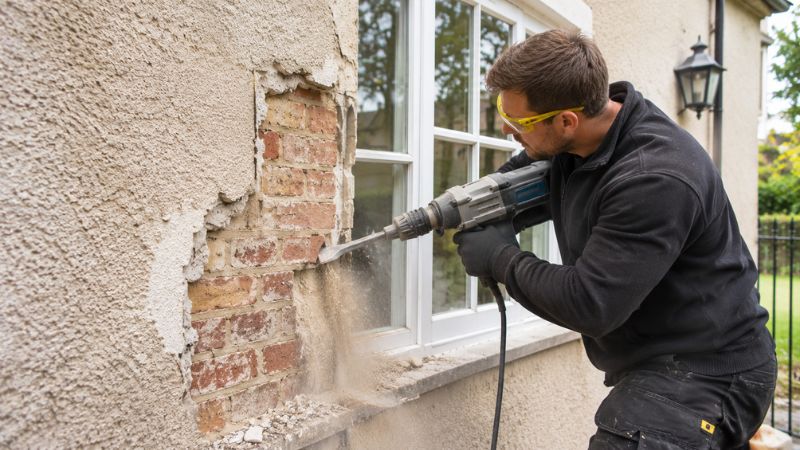
Once the approach has been agreed, the surrounding areas should be protected. Windows, doors, nearby surfaces and other features may need plastic sheeting or suitable coverings to reduce the spread of dust and debris.
The render is then removed in controlled sections using suitable tools. An SDS hammer drill with a chisel attachment may be used for some types of pebbledash and render. Hand tools can be useful around delicate details and areas where more control is needed.
The aim is to remove the outer coating without causing unnecessary damage to the brick faces or mortar joints. Rushing this stage can create extra repair work, which may increase the total cost of the project.
After removal, the exposed wall should be checked. Some properties may reveal attractive original brickwork that can be cleaned and left visible. Others may need repointing to replace worn mortar or brick repairs to deal with damaged sections.
Brick cleaning may also be needed to remove remaining dirt, render residue or other surface deposits. The cleaning method should suit the type and condition of the bricks.
If you do not want exposed brickwork, the wall can be assessed for a suitable new finish. Breathable render may be an option for some buildings, depending on the wall construction and moisture conditions.
Dynamic Restoration Ltd provides render and pebbledash removal services, with an emphasis on assessing the wall, testing the surface and using controlled removal methods. The company also carries out related brick cleaning and repointing work, helping property owners consider the condition of the exposed brickwork after removal. Its service coverage includes South West London and areas along the Surrey borders.
How Can You Keep Render Removal Costs Under Control?
Planning the work properly can help prevent unexpected expenses. The first step is to establish whether the entire property needs render removal or whether the problem is limited to certain walls.
If the coating is cracked or loose in one area, a full removal project may not always be necessary. However, patch repairs can look uneven because older pebbledash often fades and weathers over time. A new section may have a different colour or texture from the existing surface.
If there are signs of widespread cracking, trapped moisture or loose render, a wider inspection may be needed. Covering damaged areas with another layer may hide the problem rather than deal with its cause.
It is also important to compare quotations fairly. Make sure each contractor has measured the same wall areas and included similar work. One quotation may cover render removal only, while another may include brick cleaning and waste removal.
Ask whether scaffolding, protective coverings and debris disposal are included. If the brickwork needs repointing or repairs, check whether these are included in the price or treated as separate work.
You should also ask how the contractor plans to protect the original bricks. This is especially important for older properties in Surrey, where traditional brickwork may be more fragile than modern materials.
Avoid choosing a contractor based only on the lowest price. Poor removal methods can damage the wall and lead to extra spending on brick repairs. A clear explanation of the process, suitable equipment and a test area can help you understand what you are paying for.
Dynamic Restoration Ltd offers a free, no-obligation test panel to help assess the surface and demonstrate the expected result before a project begins. The company also uses protective sheeting where required to protect nearby areas during restoration work. These steps can help homeowners make a more informed decision about their property.
Frequently Asked Questions
How much does it cost to remove pebbledash from a house in Surrey?
The cost depends on the size of the walls, thickness of the pebbledash, condition of the brickwork and access requirements. Additional work such as brick cleaning and repointing may also affect the final price. A site inspection is the best way to receive an accurate quotation.
Is render removal more expensive than re-rendering?
Render removal can involve more labour because the existing coating needs to be taken off carefully and the surface beneath must be checked. Re-rendering may be less involved if the existing surface is sound and suitable for another coating. However, covering damaged or damp render without dealing with the cause may lead to further problems.
How long does it take to remove render from a house?
A small section of wall may take one or two days, while removing render from the front and rear of a house can take several days or longer. The thickness of the coating, condition of the bricks and access to the walls all affect the timescale.
Will removing render damage the bricks underneath?
There is a risk of damage if unsuitable tools or excessive force are used. This is why the wall should be inspected and a suitable removal method selected. Testing a small section first can help establish how the render responds and how the bricks are likely to react.
Can I expose the original brickwork after removing pebbledash?
Yes, if the brickwork underneath is in suitable condition. Once the pebbledash has been removed, the bricks may need cleaning and the mortar joints may need repairs. Some properties reveal attractive original brickwork, while others require further restoration before the surface is ready to be exposed.