
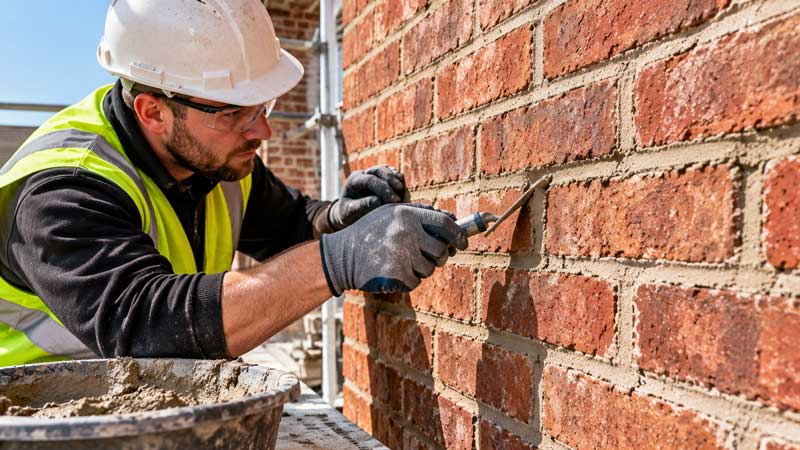
How to Choose the Right Mortar for Repointing Brickwork
Choosing the right mortar for repointing brickwork is more important than it may first appear. Mortar does more than fill the gaps between bricks. It helps protect the wall from rain, allows moisture to move through the masonry and takes some of the movement caused by changes in temperature. If the wrong mortar is used, the repair can create new problems instead of solving the old ones.
This is especially important when repointing older homes and period properties. Traditional brickwork may have been built with lime mortar, while newer buildings may use cement based mixes. The bricks, mortar, age of the wall, exposure to weather and existing joint style all need to be considered before choosing a replacement.
There is no single mortar that is right for every property. The best choice is one that works with the existing brickwork rather than simply being the hardest or strongest option available.
What Should You Consider When Choosing Mortar for Repointing?
The first thing to consider is the existing mortar. Before removing damaged joints, it is useful to understand what the original material is made from and how it behaves. Older buildings often use lime mortar because it is softer and allows moisture to move through the wall. Modern buildings are more likely to use cement based mortar, although the exact mix can vary.
The age of the property can provide a useful starting point, but it should not be the only factor. Dynamic Restoration provides extensions, previous repairs and alterations may mean that different parts of the same building contain different materials. A later repair may have been completed using a cement mortar even though the original wall used lime. This is why the existing joints should be inspected rather than assuming the whole property uses one type.
Brick type also matters. Some older bricks are softer and more porous than modern engineering bricks. A very hard mortar can create a poor match if the brick is designed to absorb and release moisture. In some cases, the brick may become the weaker part of the wall and start to suffer from surface damage while the harder mortar remains intact.
Moisture movement is another key concern. Traditional masonry often needs to release moisture through the joints. Lime mortar can support this movement because it is more permeable and flexible than many cement based mixes. If an unsuitable hard mortar is used, moisture may be pushed towards the brick instead of being released through the joint. Over time, this can contribute to cracking, spalling or frost related damage.
The location of the wall should also be considered. A sheltered internal wall does not face the same conditions as an exposed elevation that receives heavy rain and wind. Chimneys, parapets and other exposed areas may need particular attention because they face more severe weather conditions.
The colour and texture of the existing mortar are also important. Repointing should not make repaired areas look completely separate from the rest of the building. The new mortar should be chosen and finished so that it sits naturally with the existing brickwork. Colour is affected by the materials used, the mix and the final finish, so a simple colour sample may not always tell the whole story.
Is Lime Mortar or Cement Mortar Better for Repointing?
Lime mortar and cement based mortar behave differently, so the choice should be based on the building rather than a general idea that one is always better. Lime mortar has been used in traditional masonry for centuries. It is softer, more flexible and allows moisture to move through the wall. These qualities can make it suitable for many older properties.
There are different types of lime mortar, including lime putty mortar and hydraulic lime mortar. They do not behave in exactly the same way. Hydraulic lime sets through a reaction with water, while lime putty mortar sets mainly through contact with carbon dioxide in the air. The correct option depends on the type of masonry, exposure and project requirements.
Cement based mortar is harder and generally sets more quickly. It is widely used in modern construction and can be appropriate where the existing building has been constructed using compatible cement based materials. However, using a strong cement mortar on an older wall simply because it appears more durable can be a mistake.
A common problem occurs when a hard mortar is used with softer historic brick. The mortar may resist weathering while the brick absorbs movement and moisture. This can leave the brick vulnerable to damage around the joints. Repointing should therefore aim for compatibility rather than maximum hardness.
The mix also needs to be considered. Mortar is generally made from a binder, such as lime or cement, combined with sand and water. The type, grading and colour of the sand can affect the appearance and performance of the finished joint. The proportions also matter. A mix that is too rich in binder may behave differently from the original mortar.
The joint profile is another part of the repair. Flush, recessed, weather struck and other pointing styles can change the appearance of the wall and affect how rain interacts with the surface. The finish should suit the building and existing masonry rather than being selected only for appearance.
How Can You Choose Mortar for Older and Period Brickwork?
Older and historic brickwork needs particular care because its materials may have been designed to work together as a system. The bricks, mortar and wall construction can all affect moisture movement. Repointing should therefore preserve this balance wherever possible.
A close inspection should look for crumbling joints, cracks, missing mortar, damp areas, damaged bricks and signs of previous repairs. It can also help identify whether the existing mortar appears soft and friable or hard and cement based. Where the original material is unclear, further assessment may be needed before work begins.
The condition of the brickwork can also affect the preparation stage. Damaged mortar needs to be removed carefully to avoid harming the brick edges. The joints should then be cleaned and prepared before fresh mortar is applied. Simply placing new mortar over loose or weak material can result in a poor repair.
Matching the new mortar is not only about colour. It should also have suitable strength, flexibility, permeability and texture. A visually close match that behaves differently from the original can still cause problems. This is why mortar selection should be treated as part of the technical side of repointing rather than simply a finishing choice.
Weather conditions during the work can matter too. Mortar needs suitable conditions while it cures. Very hot, dry or wet weather can affect how the material behaves. Protecting fresh joints and allowing them to cure correctly can help the repair develop the required properties.
Professional assessment can be particularly useful when working on older buildings, exposed walls or areas with previous repairs. Dynamic Restoration’s repointing guidance highlights the importance of matching mortar to the existing structure and taking care during mortar removal and application.
The aim is not simply to make the joints look new. The new mortar needs to work with the brickwork and help the wall manage moisture and weather exposure. This is why choosing the right mortar should happen before the repointing begins, not after the old joints have already been removed.
Frequently Answered Questions
What is the best mortar for repointing old brickwork?
There is no universal best mortar for old brickwork. Lime mortar is often suitable for traditional and historic masonry because it is softer and allows moisture to move through the wall. However, the existing mortar, brick type, exposure and condition should all be assessed before choosing a mix.
Should I use lime mortar for a Victorian house?
Many Victorian properties contain traditional brickwork that can benefit from a compatible lime mortar, but the construction date alone does not determine the correct mix. Previous repairs may have introduced cement based materials. The existing wall should be assessed before selecting the replacement mortar.
What is the difference between lime mortar and cement mortar?
Lime mortar is generally softer, more flexible and more permeable, allowing moisture to move through traditional masonry. Cement mortar is generally harder and sets differently. The correct choice depends on the materials and construction of the existing wall.
Can the wrong mortar damage bricks?
Yes. A mortar that is too hard or unsuitable for the brick can contribute to cracking, surface damage and moisture related problems. This is particularly important with older, softer bricks that were designed to work with more flexible traditional mortar.
What mortar mix should be used for repointing?
The correct mix depends on the existing masonry. Mortar commonly contains a binder, sand and water, but the type and proportions need to suit the wall. There is no single ratio that should be used for every property.