
What Is the Best Way to Remove Stains from Brickwork?
Stained brickwork can change the whole look of a property. Dark pollution marks, green algae, white salt deposits, old paint, mortar smears and general dirt can hide the natural colour and texture of the brick. So, what is the best way to remove stains from brickwork without damaging the surface underneath?
The answer depends on the stain, the type and age of the brick, the condition of the mortar and any previous treatments. Brick cleaning is not simply a case of using the strongest chemical or highest pressure available. A method that works on a modern hard brick may be unsuitable for an older or softer brick. The wrong approach can mark the brick face, damage mortar joints or push water further into the wall.
Dynamic Restoration Ltd specialises in brick, stone and masonry cleaning and is based in London. Its website describes an assessment and test panel process before work begins, helping to identify a suitable cleaning technique for the masonry.
What Causes Stains on Brickwork?
Brick stains come from several sources, and identifying the cause is an important part of choosing the right cleaning method. Dirt and general weathering are common on exposed walls, while traffic pollution can leave dark carbon deposits on properties in busy areas. Rain can also carry pollutants down a façade, creating streaks that become more noticeable over time.
Moss and algae tend to appear where brickwork stays damp or receives limited sunlight. They can leave green, brown or dark patches and may keep the surface damp for longer. Removing the visible growth is useful, but the reason it developed should also be considered. Poor drainage, leaking gutters, nearby vegetation or persistent moisture can allow the problem to return.
Paint is another difficult stain. Old paint can flake, peel or remain firmly attached to porous brick. Scraping it aggressively may remove part of the brick surface along with the coating. Chemical paint removal can be suitable in some cases, but the treatment needs to match the masonry.
Mortar and cement marks are often left after building, repair or repointing work. These deposits can be stubborn once they have dried onto the brick face. They should not be attacked with harsh tools simply because they are difficult to remove. The aim is to remove the deposit while leaving the brick and mortar joints intact.
White powdery marks are commonly known as efflorescence. They form when water moves through masonry and carries soluble salts towards the surface. As the water evaporates, the salts are left behind. Efflorescence can sometimes be brushed away once dry, but recurring deposits may point to an underlying moisture issue. Cleaning the mark without understanding the source may only provide a short-term improvement.
For this reason, the right brick stain removal method is linked to the type of contamination and the condition of the wall. A visual inspection can reveal clues that are easy to miss when the surface is covered in dirt.
Which Brick Cleaning Method Is Best for Different Stains?
There is no single cleaning method that suits every brick wall. A careful process starts with a small test area. This shows how the brick reacts and helps establish whether the chosen treatment is suitable before the whole façade is cleaned. Dynamic Restoration Ltd says it provides free test panels to help assess the result and determine an appropriate technique.
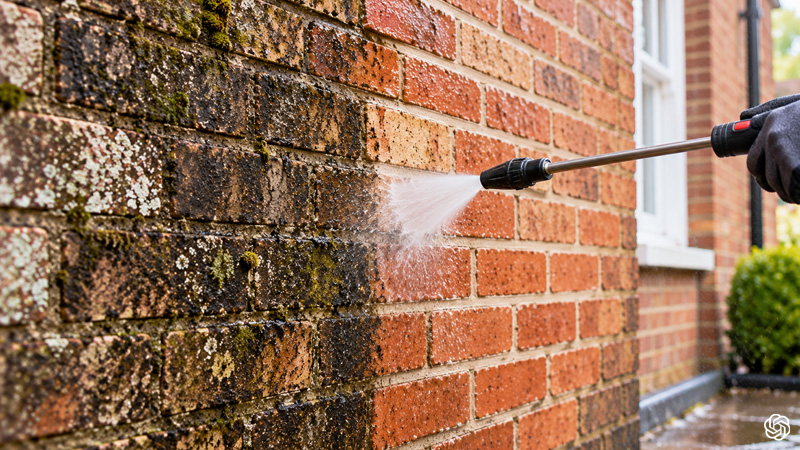
For light dirt and some surface pollution, gentle washing with a suitable cleaning solution may be enough. Soft washing uses a controlled application rather than relying on force to remove contamination. Depending on the surface, low-pressure water may also help lift loosened material. The important point is that pressure should be controlled rather than used as a substitute for proper cleaning.
Steam cleaning can be useful in some situations because heat and controlled moisture can help loosen dirt and organic growth. It may suit certain masonry surfaces, but it still needs care. Old bricks, weak mortar and damaged surfaces can react differently from newer, harder materials.
Chemical cleaning is often considered for stubborn stains. Suitable cleaning agents can help break down pollution deposits, biological growth, paint residue or other contamination that water alone cannot remove. However, stronger does not mean better. An unsuitable chemical can discolour brick, affect mortar or cause damage that becomes visible after the wall dries.
Pressure washing deserves particular care. High pressure can remove more than the stain. It may strip the outer face of a brick, erode mortar joints and force water into cracks or porous areas. This is especially important with older properties and walls built with softer bricks or lime mortar.
Wire brushes and aggressive scraping can cause similar problems. Brick faces can be scratched and mortar joints can be worn away. When a stain is difficult to remove, increasing physical force is not always the answer. The better approach is to understand what the stain is made of and select a treatment that works with the material.
How to Remove Brick Stains Without Damaging the Wall
Good brick cleaning is as much about preparation as it is about the cleaning itself. Windows, doors, plants, paving and nearby surfaces may need protection before treatment begins. Areas of damaged brick or weak mortar should also be noted before cleaning.
The wall should be tested in a small, less noticeable area before full cleaning begins. This can show changes in colour, texture and mortar condition, while also showing how much of the staining can realistically be removed.
Once the method is chosen, cleaning should be controlled and even. It is important not to concentrate pressure, heat or chemicals on one small area for too long. After treatment, residues should be removed properly and the masonry should be allowed to dry naturally. A wall can look different while it is wet, so judging the final result too early can be misleading.
Cleaning can also reveal problems hidden beneath staining. Cracked bricks, spalled faces, failing mortar and damp marks may become easier to see once the surface is clear. This makes brick cleaning useful as part of wider restoration work, rather than simply a cosmetic improvement. Dynamic Restoration Ltd also offers related masonry services including repointing, paint removal, stone cleaning and render removal.
Older and heritage buildings need particular care. Their bricks may be softer, their mortar may be lime based and their surfaces may have developed a natural appearance over many years. Removing too much material can change the character of the building. Where a property has historic value, the masonry should be assessed first and the least aggressive suitable method should be considered.
When Should You Use Professional Brick Stain Removal?
Some light staining can be dealt with as part of routine maintenance where the cause is known and the surface is sound. More difficult stains need greater caution. Paint, heavy carbon deposits, cement residue, widespread algae and staining on old or fragile brickwork can all create a higher risk of accidental damage.
Professional assessment is also useful when you are not sure what the stain is. A dark mark may be pollution, biological growth, moisture staining or a combination of several issues. Treating the wrong cause can waste time and may make the surface harder to clean later.
Cleaning can also be useful before repointing, paint removal or render removal because it makes the underlying masonry easier to inspect. Once the surface is visible, repair decisions can be based on the actual condition of the wall.
Dynamic Restoration Ltd describes itself as an independent London based exterior restoration company specialising in brick, stone and masonry cleaning. Its website also highlights work across South West London, South London and Surrey border areas.
Frequently Asked Questions
What is the best way to remove stains from brickwork?
The best method depends on the stain and the brick itself. Gentle cleaning, steam, low-pressure washing or a suitable chemical treatment may be appropriate in different situations. Testing a small area first helps reduce the risk of damaging brick or mortar.
Can I use a pressure washer to clean stained bricks?
A pressure washer can be suitable for some masonry when used at a controlled pressure, but high pressure can damage brick faces and mortar joints. Older or softer brickwork needs particular care.
How do you remove green algae and moss from brickwork?
Moss and algae can often be treated with a suitable cleaning solution followed by controlled washing or another appropriate method. The cause of persistent moisture should also be considered, because cleaning alone may not stop the growth returning.
Can old paint be removed from brick without damaging it?
Yes, but the method needs to suit the brick and type of paint. Aggressive scraping can damage the brick face. Specialist paint removal may use controlled chemical treatments or other methods after testing a small area.
Is brick cleaning safe for old or Victorian houses?
It can be, but older brickwork often needs a gentler approach. Victorian and other period properties may contain softer bricks and traditional mortar. Testing and careful method selection are important to avoid removing the brick surface or damaging historic details.