
Can Repointing Prevent Damp and Water Damage?
When brickwork starts to show cracks, gaps or crumbling mortar, it is easy to see the problem as mainly cosmetic. However, damaged mortar joints can also affect how well a wall deals with rain and moisture. This raises an important question for homeowners: can repointing prevent damp and water damage?
The short answer is that good repointing can help reduce the risk of rainwater entering through failed mortar joints. It does this by removing damaged mortar and replacing it with suitable new mortar, helping restore the protective joints between the bricks. However, repointing is not a cure for every type of damp. Rising damp, condensation, plumbing leaks and other moisture problems can have different causes.
Understanding how repointing works, when it is needed and what signs to look for can help you decide whether damaged brickwork could be contributing to moisture problems around your property.
How Can Damaged Mortar Cause Damp and Water Damage?
A brick wall is made up of more than the bricks themselves. The mortar joints between the bricks play an important role in keeping the masonry together and helping protect the wall from weather.
Over time, wind, rain, frost and temperature changes can cause mortar to weaken. Small cracks can develop, joints can become recessed and sections may eventually crumble or disappear. Once there are open gaps in the pointing, rainwater can find easier routes into the wall.
This does not mean every damaged mortar joint will immediately cause internal damp. Brickwork is designed to deal with some moisture, and walls can dry naturally when they are in good condition. The problem becomes more serious when water repeatedly enters through damaged joints and the wall cannot dry properly.
Frost can make the situation worse. When water enters small cracks or gaps and then freezes, it expands. Repeated freezing and thawing can place additional stress on mortar and masonry. Over time, this can contribute to further deterioration.
Chimneys and exposed elevations can be particularly vulnerable because they receive weather from several directions. A chimney with failing mortar may allow rainwater to enter around the joints, which can contribute to damp patches near chimney breasts or upper sections of a property.
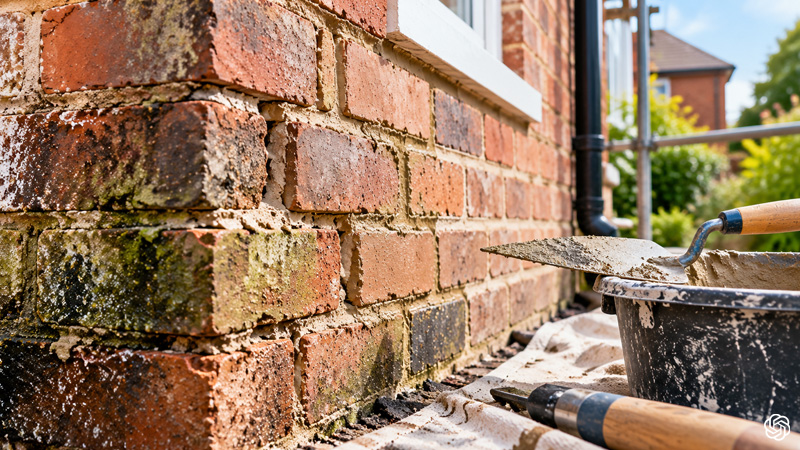
Signs of failing pointing can include cracked mortar, powdery joints, visible gaps, loose sections and areas where the mortar has fallen away from the brick face. Moss or plant growth around joints can also indicate that moisture is being retained in the masonry.
The age of a building matters too. Older properties may have been built with lime mortar, which behaves differently from modern cement-based mortar. Lime mortar can allow moisture to move through the wall and evaporate. Using an unsuitable hard mortar during repairs can sometimes create problems for older brickwork.
For this reason, repointing should not simply involve filling visible gaps with any available mortar. The condition of the existing joints, brick type, building age and exposure should all be considered.
Can Repointing Prevent Damp and Water Damage?
Repointing can help prevent rainwater from entering through damaged mortar joints by restoring the gaps between bricks. When deteriorated mortar is carefully removed and replaced with suitable new pointing, the wall has better protection against driving rain and weather exposure.
The important point is that repointing addresses a particular route for moisture. If the wall is allowing water through failed joints, repairing those joints can reduce the problem. If the damp is coming from another source, repointing alone will not solve it.
A proper assessment should therefore come before the work. Look at where the damp appears inside the property and compare this with the condition of the external brickwork. Damp around an exposed external wall may have a different cause from damp that appears at ground level.
The condition of the mortar also needs to be checked. If only a few joints are damaged, local repairs may be appropriate. If deterioration is widespread, more extensive repointing may be needed.
The process normally involves removing loose or damaged mortar from the affected joints, preparing the joints and applying new mortar. The depth and method of mortar removal need to be controlled because aggressive work can damage the surrounding bricks.
The new mortar should also be appropriate for the existing masonry. This is especially important with older properties. A mortar that is too hard for softer historic bricks can place additional stress on the brick edges instead of allowing the wall to behave as intended.
Dynamic Restoration describes repointing as a service that restores mortar joints in brickwork and improves weather resistance. Its repointing information also highlights the importance of suitable mortar, including lime mortar for certain older buildings.
Repointing can therefore be an important part of preventing weather-related water damage, but it should be viewed as part of wider building maintenance rather than a universal damp treatment.
When Should You Consider Repointing?
The earlier failing mortar is identified, the easier it can be to understand what needs attention. A wall does not necessarily need full repointing simply because it is old. The condition of the joints is more important than age alone.
Look closely at areas that receive a lot of rain, particularly exposed elevations, parapets, gable ends and chimneys. If mortar appears cracked, recessed, loose or powdery, it may need further inspection.
Gaps between bricks are another warning sign. These openings can allow water to reach deeper into the wall, particularly during periods of wind-driven rain.
You should also pay attention to internal signs. Damp patches, staining, peeling paint or mould near an external wall may indicate a moisture problem. However, these symptoms can have many causes, so it is important not to assume that repointing will automatically solve them.
A professional inspection can help connect the condition of the external wall with what is happening inside. The brickwork, mortar, joints, drainage and other possible moisture routes can then be considered together.
Chimneys deserve particular attention because they are exposed to harsh weather and can be difficult to inspect from ground level. Damaged mortar around a chimney can allow water to enter areas that are difficult to reach, making early assessment useful.
The same applies to properties with historic brickwork. If the building uses lime mortar, the repair approach should respect the way the original wall was constructed. The wrong repair material can create new problems even if the finished joints initially look neat.
Dynamic Restoration’s project information includes repointing work on residential brickwork where cracked or missing mortar had contributed to water entering the wall. Its gallery also shows restored brick façades and repointed brickwork as part of wider restoration projects.
The purpose of repointing should therefore be more than making the wall look fresh. The joints need to perform their practical role while fitting the character and construction of the building.
Once repointing has been completed, the wall should still be monitored. Gutters, downpipes and roof details should be kept in good condition because water running repeatedly over brickwork can contribute to future deterioration. Plants growing directly against walls should also be managed where they trap moisture or affect the mortar.
Good maintenance does not mean a wall will never get damp. Instead, it helps reduce avoidable moisture entry through damaged areas and gives you a better chance of identifying problems before they become more extensive.
Frequently Asked Questions
Can repointing stop damp coming through brick walls?
Repointing can reduce damp caused by rainwater entering through damaged or missing mortar joints. It will not stop every form of damp, so the source of the moisture should be identified before assuming that repointing is the answer.
How does repointing protect brickwork from rain?
Repointing replaces deteriorated mortar joints with suitable new mortar. This helps close gaps where wind-driven rain could enter and improves the wall’s resistance to weather exposure.
Can damaged pointing cause internal damp?
Yes, damaged pointing can contribute to internal damp where rainwater enters through open or deteriorated joints. However, internal damp can also result from other sources, including plumbing leaks, condensation and rising damp.
Does repointing make a wall waterproof?
Repointing improves the wall’s resistance to rainwater but should not be described as making brickwork completely waterproof. Brick walls need to manage moisture naturally, and the correct mortar helps the wall respond to weather in the intended way.
Is lime mortar better for old brick houses?
Lime mortar can be suitable for some older buildings because it is more breathable and flexible than many modern cement-based mortars. The correct mortar depends on the original construction and condition of the building, so it should be assessed rather than chosen simply because a property is old.