
Stone Cleaning Methods Explained: Steam, Chemical and Low Pressure Cleaning
Dirty stone can change the whole appearance of a building. Pollution can leave dark marks, moss and algae can create green staining, while years of rain and general weathering can make natural stone look dull and tired. Cleaning can restore much of its original appearance, but choosing the right method is just as important as removing the dirt.
Stone cleaning methods are not interchangeable. Steam cleaning, chemical cleaning and low pressure cleaning all work in different ways. The right choice depends on the type of stone, the age and condition of the surface, the type of staining and whether the building has heritage value.
Using too much pressure or the wrong cleaning product can damage a surface that has taken decades or even centuries to develop its character. A careful assessment before cleaning helps reduce this risk and gives the best chance of achieving a clean surface without unnecessary wear.
What Are the Main Stone Cleaning Methods?
Steam cleaning uses heated water vapour to loosen dirt and biological growth from the stone surface. One system used for specialist stone cleaning is the DOFF method, which combines superheated water with controlled pressure. This can be useful where the surface needs a gentler approach, particularly on older masonry, memorials and some heritage stonework.
Steam can help remove moss, algae, surface dirt and some coatings without relying heavily on chemical products. It can also be useful around detailed features where aggressive mechanical cleaning would be difficult. However, steam cleaning still needs to be controlled according to the condition of the stone. A method being described as gentle does not mean every setting is suitable for every surface.
Chemical stone cleaning works differently. A suitable cleaning solution is applied to break down specific deposits such as pollution, carbon staining, biological growth or other contaminants. Once the material has been loosened, the surface can be rinsed using controlled water pressure.
Chemical cleaning can be useful on stone that has collected years of pollution, particularly on exposed façades in urban areas. However, chemical products must be selected carefully. Different types of stone react differently to cleaning agents, and an unsuitable product can cause staining or surface changes. Testing a small area before wider treatment is therefore an important part of responsible stone cleaning.
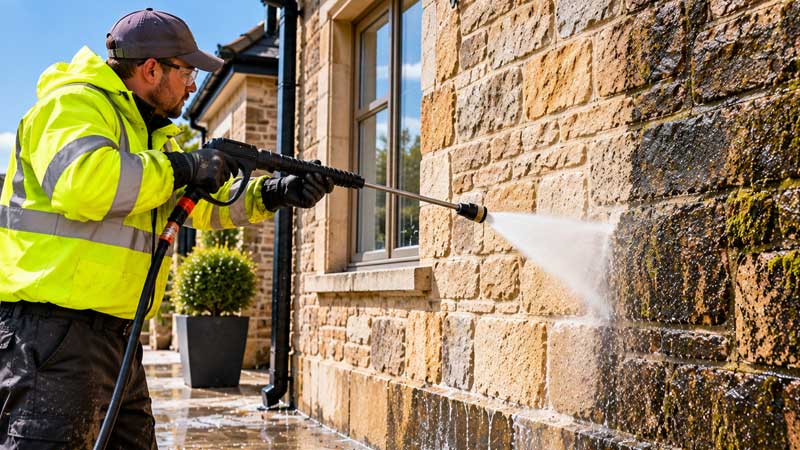
Low pressure cleaning uses a controlled flow of water or a fine spray to remove softened dirt without the force associated with high pressure washing. It can be useful for sensitive stone and historic façades where excessive pressure could damage the surface or mortar joints.
A nebulous spray technique is an example of a low pressure approach. It uses a fine mist to soften and remove surface deposits while limiting the amount of water and force applied to the stone. This type of cleaning can be considered for delicate limestone, Bath stone and other sensitive surfaces where a more forceful method would be unsuitable.
Some projects may also use an abrasive cleaning system such as TORC. This combines air, water and a fine cleaning media to help remove tougher deposits. Although it has more cleaning power than simple low pressure water cleaning, it still needs careful control and should only be considered when appropriate for the surface.
How Do You Choose the Right Stone Cleaning Method?
The type of stone is one of the first things to consider. Limestone, sandstone, Portland stone, Bath stone, marble and granite do not all react in the same way to cleaning. Porous stones can absorb water and cleaning products, while softer surfaces may be more vulnerable to abrasion or excessive pressure.
Limestone is often treated carefully because its surface can be affected by unsuitable chemicals or aggressive cleaning. Sandstone can also require a controlled approach because its porous structure can hold moisture, dirt and biological growth. Portland stone is common on many London buildings and can develop heavy pollution staining, while marble may need specialist treatment to avoid dulling or marking its surface.
The age of the building matters as well. Modern stonework may be more straightforward to clean, while older façades can contain fragile surfaces, weathered joints and previous repairs. Listed and heritage buildings need particular care because the aim is not simply to make the surface look cleaner. The original material and architectural character also need to be protected.
The type of staining provides another clue. Moss and algae may respond well to steam or suitable cleaning treatments. Dark carbon deposits from pollution may need a different approach. Paint, rust, oil and other deep or stubborn marks may require a specialist chemical treatment or poultice.
A poultice works by drawing certain stains out of porous stone. It can be useful when a surface stain cannot be removed effectively through simple washing. The treatment is applied to the affected area and allowed to work before being carefully removed. This method can be particularly useful for localised staining, but it still requires testing and appropriate product selection.
The condition of the stone should never be overlooked. Cracks, flaking, erosion, loose sections and damaged mortar can affect which method is suitable. Cleaning does not repair structural defects, and aggressive treatment can make existing weaknesses worse.
This is why a proper inspection should come before choosing a stone cleaning method. Dynamic Restoration’s approach involves assessing the stone, its condition and the type of contamination before selecting a suitable technique. Test areas can also help show how the stone responds before wider cleaning takes place.
Is Steam, Chemical or Low Pressure Cleaning Best for Heritage Stone?
There is no single answer because heritage stone varies greatly. A Victorian façade made from Portland stone may have very different cleaning needs from a carved limestone feature or an old sandstone wall. The condition of the material is often just as important as its age.
Steam cleaning can be a useful choice where the stone is sensitive and the main problem is surface dirt, moss, algae or other biological growth. Its low abrasive nature can make it suitable for some delicate features when used correctly.
Low pressure cleaning can be considered where the surface needs moisture and gentle cleaning action rather than strong force. It can be useful for fragile masonry and historic façades, especially where the aim is to soften deposits gradually.
Chemical cleaning can be appropriate where pollution, carbon staining or other deposits are strongly bonded to the stone. The chemical treatment should be matched to the material and contamination. It should not be assumed that a stronger product will produce a better result.
Heritage cleaning also needs to consider the mortar joints and surrounding materials. Cleaning one surface too aggressively can affect nearby areas. Water runoff, access equipment and protection for windows, doors and other features may also need to be planned before work starts.
A test patch is particularly useful on older buildings. It allows the cleaning method to be assessed on the actual stone rather than relying only on a general assumption about how that material should respond. The result can then be reviewed for colour, texture, staining and any signs of surface change.
The goal is not to make old stone look artificially new. Good stone cleaning should remove unwanted deposits while retaining the natural character of the material. This matters on listed buildings, churches, memorials and period homes where the surface itself can form part of the property’s history.
Frequently Answered Questions
What is the safest method for cleaning natural stone?
The safest method depends on the type and condition of the stone. Steam and low pressure techniques can be suitable for some delicate surfaces, while carefully selected chemical treatments may be needed for certain stains. A test area can help establish the most suitable approach.
Is steam cleaning safe for old stone?
Steam cleaning can be suitable for some older stone when the temperature, pressure and application are properly controlled. The condition of the surface should be assessed first, as fragile or damaged stone may need a more cautious treatment.
Can chemical cleaning damage stone?
Yes, unsuitable chemicals can damage or discolour some types of stone. Natural stone varies in composition and porosity, so cleaning products should be selected for the material and stain. Testing a small area before full treatment is a sensible precaution.
What is DOFF steam cleaning?
DOFF is a specialist steam cleaning system that uses superheated water with controlled pressure to remove certain dirt, biological growth and deposits. It can be useful for some stone and heritage cleaning projects where a non-abrasive approach is preferred.
When is chemical stone cleaning used?
Chemical stone cleaning may be considered for deposits such as pollution, carbon staining, algae and some difficult marks that cannot be removed effectively using water or steam alone. The chemical needs to be compatible with the stone.